

START HERE · INTERACTIVE GUIDE
What can happen when storm roof damage goes unrepaired?
Move through five illustrative stages. They are possible outcomes, not a fixed timetable: serious damage can occur immediately, while some roofs may remain watertight until another storm.
From shingle damage to interior repairs
Drag the handle, choose a stage or use Previous / Next.
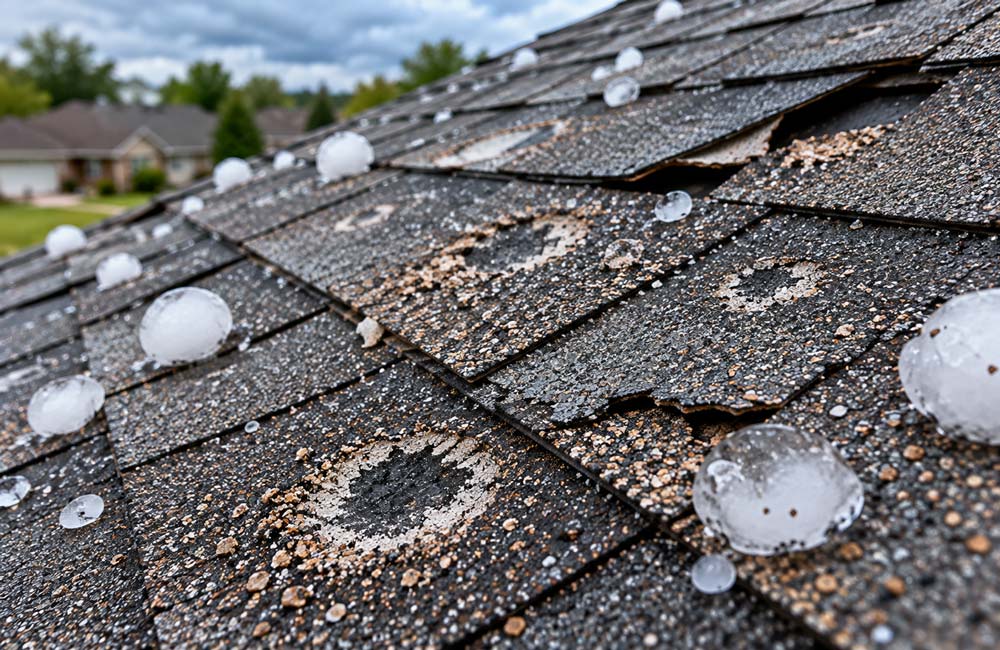
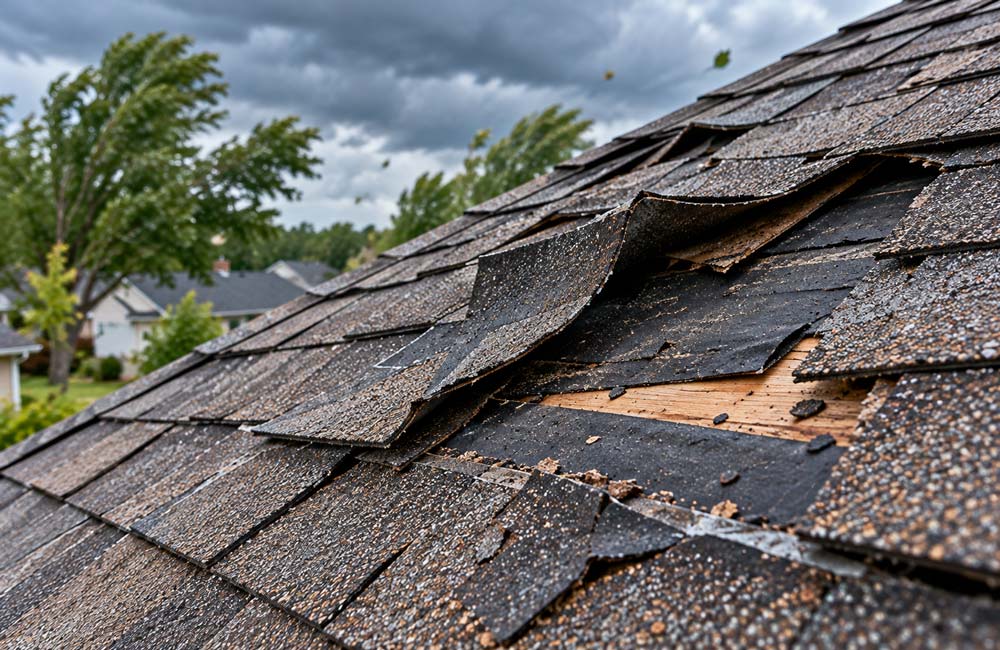
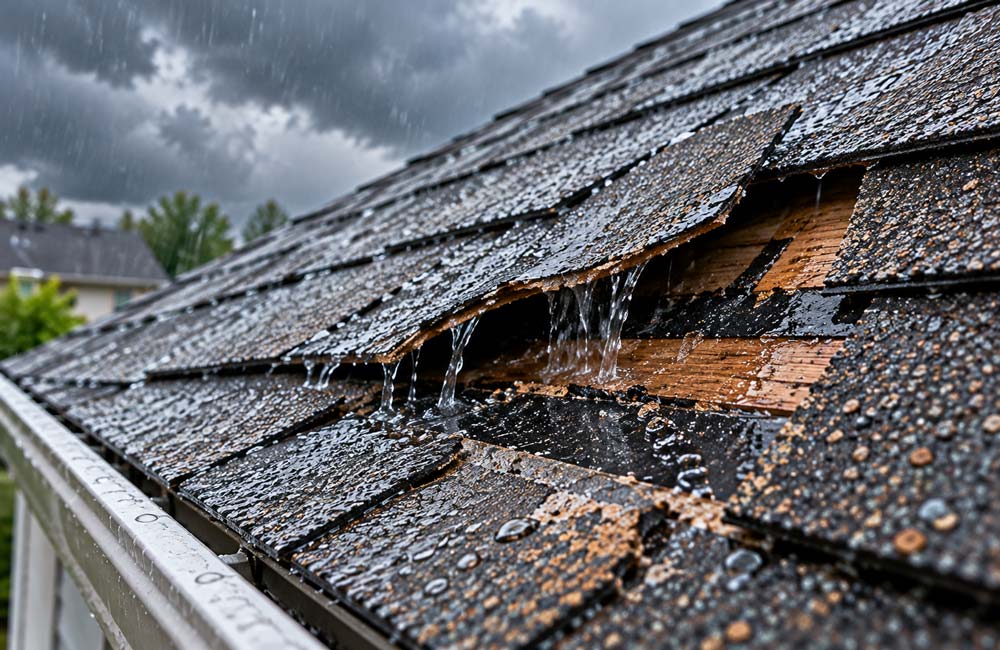
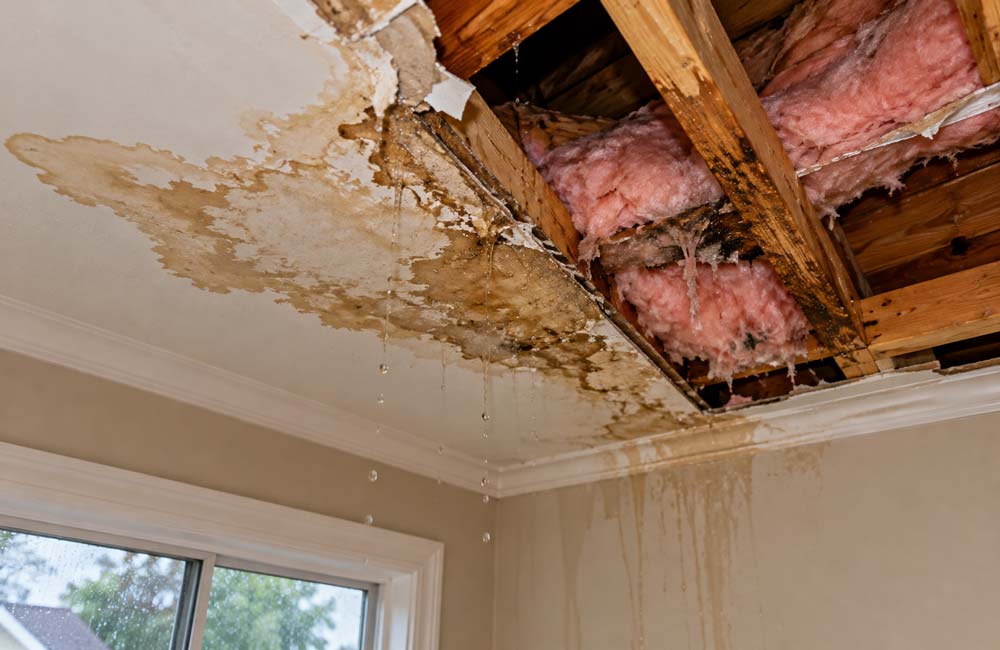
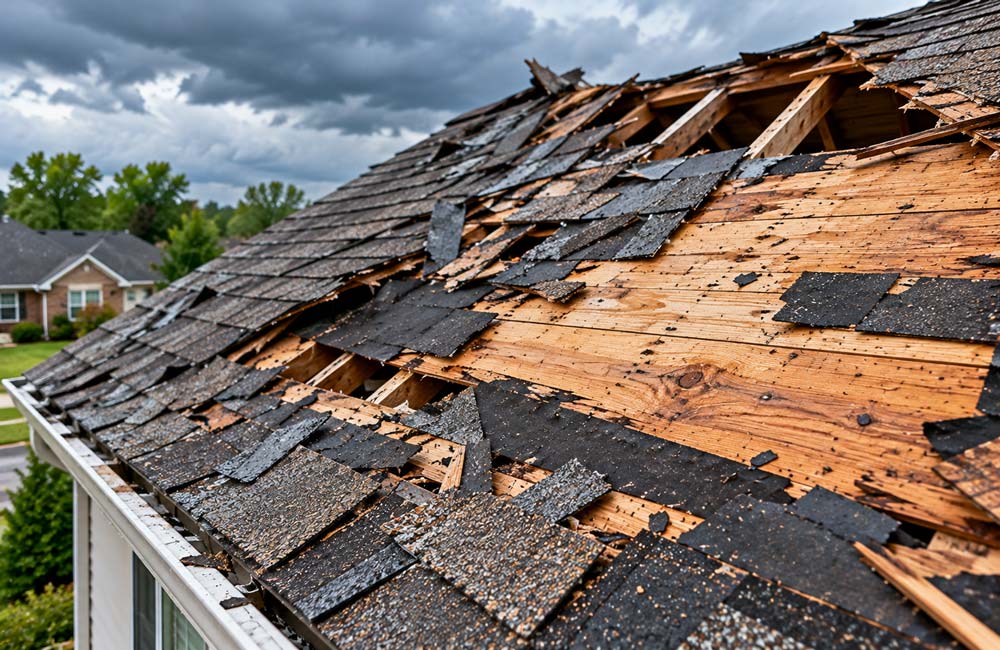
Hail or wind affects the roof covering
Hail may bruise shingles; wind can loosen tabs or break their seal.
- Visibility
- Sometimes subtle
- Main concern
- Shingle integrity
- Next step
- Document and inspect
Illustrative sequence only. A single storm can cause severe damage immediately; minor cosmetic marks may not impair roof performance.
STEP 2 · YOUR SITUATION
What did you notice after the storm?
Select the closest observation for practical next steps. This guide does not diagnose damage or determine insurance coverage.
Your situation-specific guidance will appear here.
TWO DIFFERENT TYPES OF DAMAGE
How do hail and wind damage a roof?
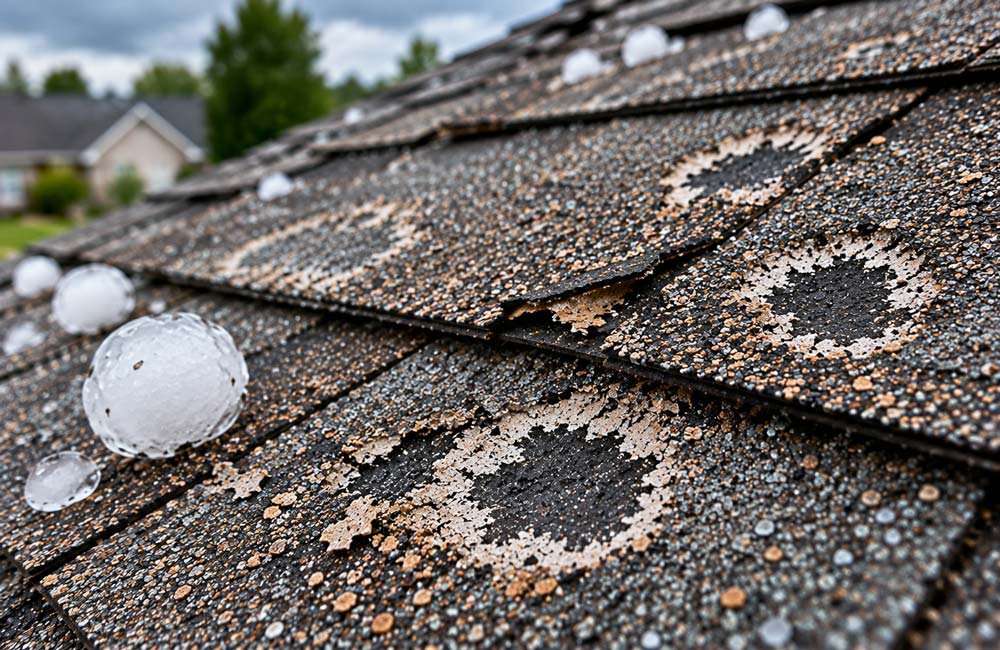
Hail damage can leave impact marks, cracks, bruised asphalt mats or displaced protective granules. The severity depends on hail size, roof age, material and impact conditions. A dent in metal or a mark on a shingle does not automatically mean the roof must be replaced.
Wind damage can break shingle seals, lift tabs, tear roofing material, loosen flashing or remove shingles altogether. Wind-driven rain may also find openings that ordinary rainfall does not exploit. After a severe storm, the two kinds of damage can occur together.
LOOK FROM A SAFE PLACE
What are the signs of roof damage after a storm?
From the ground, look for missing shingles, uneven roof edges, loose flashing, debris, fallen branches, damaged vents or pieces of roofing in the yard. Check gutters and downspouts for unusually large amounts of shingle granules, while remembering that some granule loss also occurs with age.
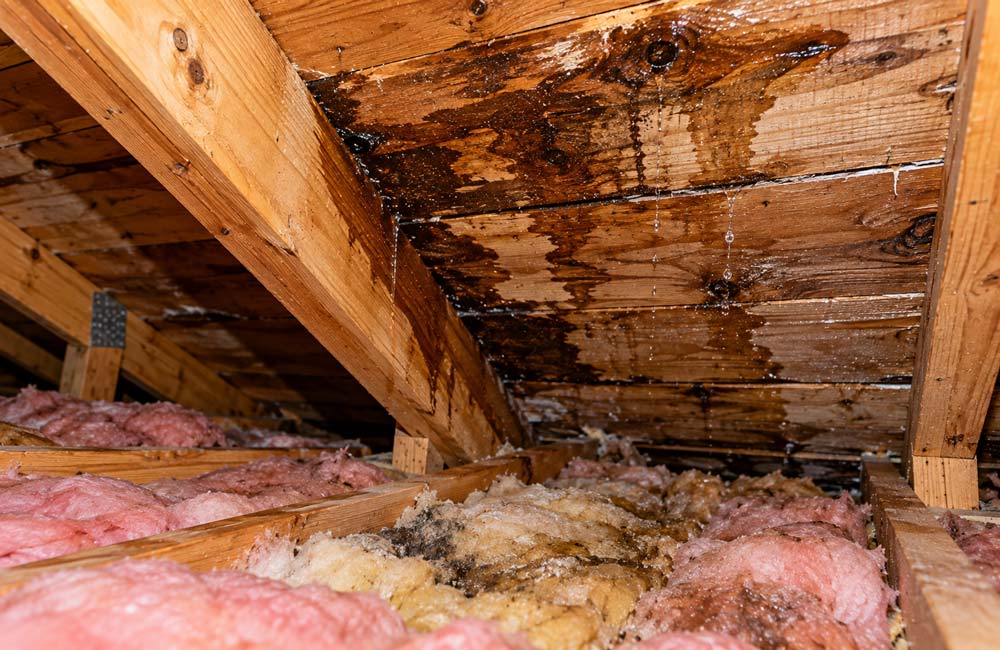
Inside, watch for fresh ceiling stains, damp attic insulation, peeling paint or a musty smell. A roof may have damage without any interior stain yet. Avoid climbing a ladder or walking on a wet or damaged roof to confirm a suspicion.
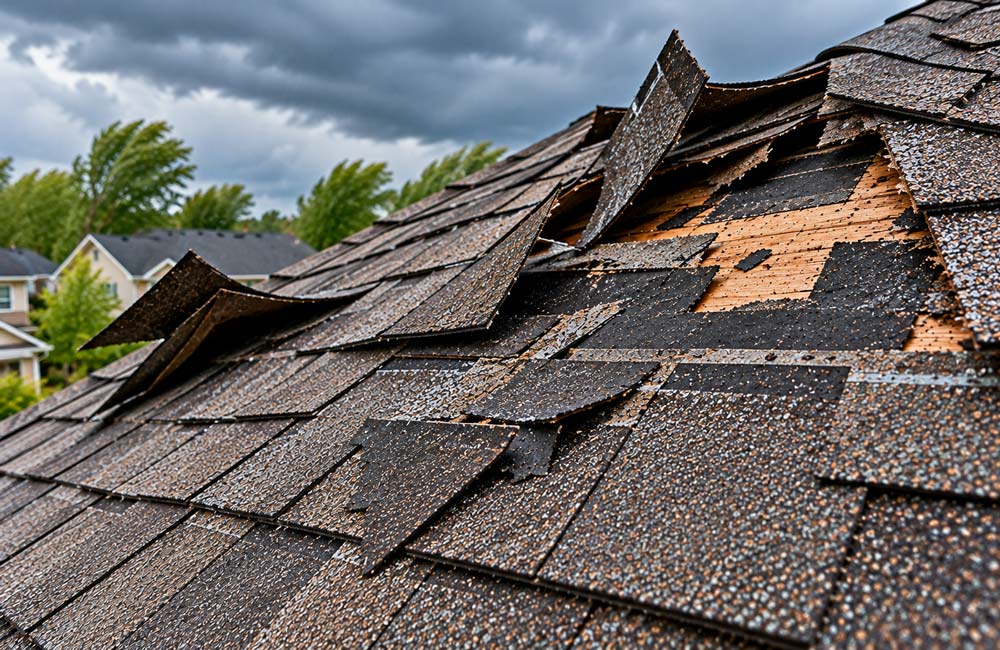
Cosmetic marks and functional damage are not the same. A qualified inspection is needed to judge whether the roof covering has lost its ability to protect the home.
AFTER THE STORM
How long can you leave hail or wind damage unrepaired?
There is no universally safe waiting period. A few cosmetic marks may require no repair, while missing shingles or active leaks call for prompt attention. Another storm can expose an already weakened area to rain and wind.
Arrange an inspection as soon as practical after a significant storm, especially if you see missing materials, loose flashing or interior water. Do not wait for a ceiling stain to prove that damage exists. If there is active water entry or structural danger, seek urgent professional assistance.
FIRST STEPS
What should you do after a hailstorm or windstorm?
Prioritize safety before photographs or repairs. Stay away from fallen power lines, unstable trees, sagging ceilings and damaged roof sections. If water is near electrical fixtures, avoid contact and seek qualified help.
From a safe location, photograph visible exterior damage and interior water stains, note the date of the storm and retain any relevant receipts. Contact a qualified roofer for an assessment and your insurer promptly if a claim may be appropriate. Reasonable emergency protection may be necessary, but do not climb onto the roof or perform dangerous temporary work yourself.
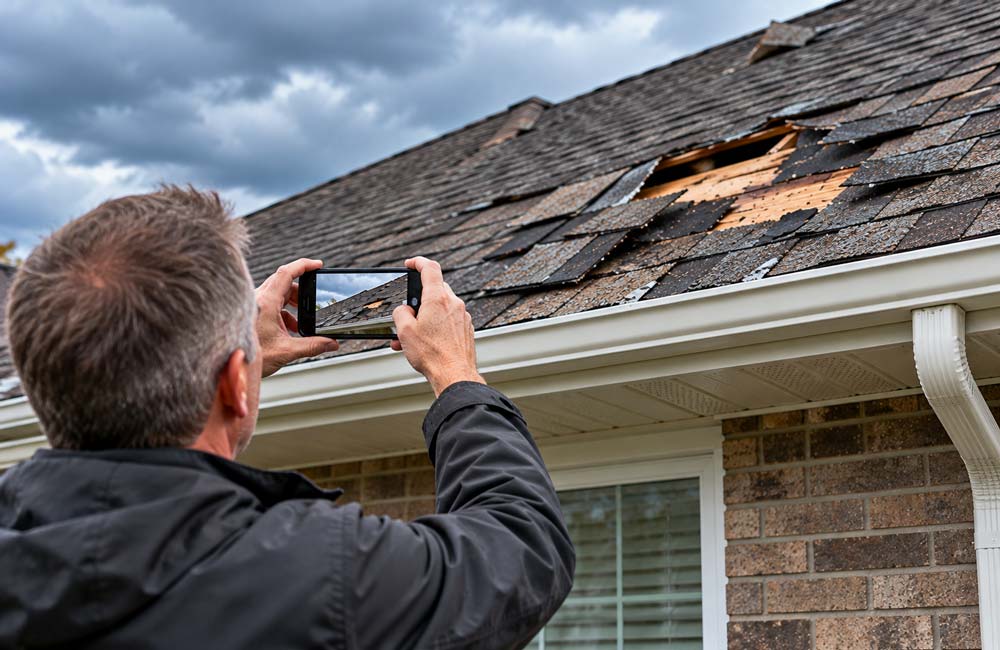
Stay safe. Keep away from structural and electrical hazards.
Document. Photograph damage without going onto the roof.
Limit further loss. Ask professionals about safe temporary protection.
Arrange inspection. Get a written description of the damage and repair options.
PROTECT THE HOME
Should you cover storm-damaged roofing temporarily?
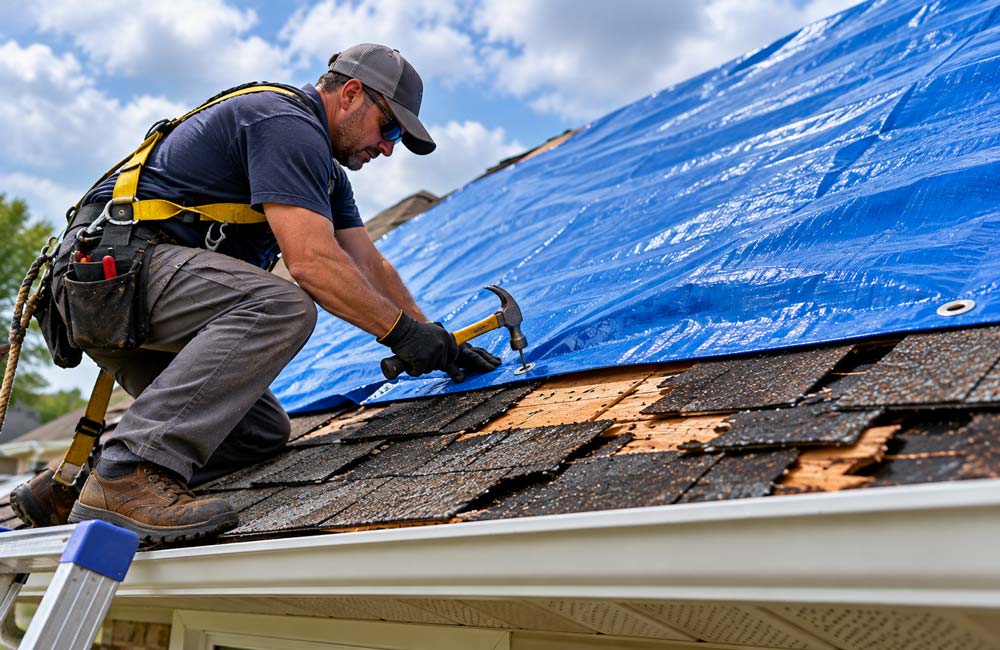
Temporary tarping or other weather protection may help limit additional water entry when repairs cannot happen immediately. The appropriate method depends on the roof, weather and location of the damage. A poorly secured covering can create hazards or further damage.
Ask a qualified roofing or emergency-restoration contractor to assess temporary protection. Never attempt to install a tarp on a wet, steep or storm-damaged roof yourself. Keep records and receipts for any emergency work.
POLICY DETAILS MATTER
Does homeowners insurance cover storm or hail roof damage?
Many homeowners policies provide some protection for sudden wind or hail damage, but coverage is not automatic. Deductibles, exclusions, roof age, actual-cash-value provisions, cosmetic-damage exclusions and state-specific policy terms may affect the result. Some policies have separate wind or hail deductibles.
Promptly notify your insurer when a claim may be needed and ask about deadlines, inspections, temporary repairs and documentation. Avoid signing away claim rights or agreeing to major work before understanding the contractor agreement and insurer process. An insurer, not a roofing salesperson, decides coverage under the policy.
If a storm caused damage and it was left open to the weather for an extended period, later deterioration may be treated differently from the original covered event. That is another reason to document damage and take reasonable safe steps to prevent additional loss.
THE PRICE OF DELAY
Will storm roof damage become more expensive if ignored?
It can. A targeted repair to shingles or flashing may be a smaller project than replacing wet decking, insulation, ceilings and interior finishes after repeated rainwater entry. Costs depend on roof type, pitch, access, materials, local labor rates and the scope of damage.
There is no reliable single national price for the consequences of delaying repairs. Ask contractors for itemized written estimates that distinguish storm damage, routine wear, temporary protection and interior restoration. Comparing the scope of work is more useful than relying on an advertised flat price.
REPAIR OR REPLACE?
Does storm or hail damage mean you need a new roof?
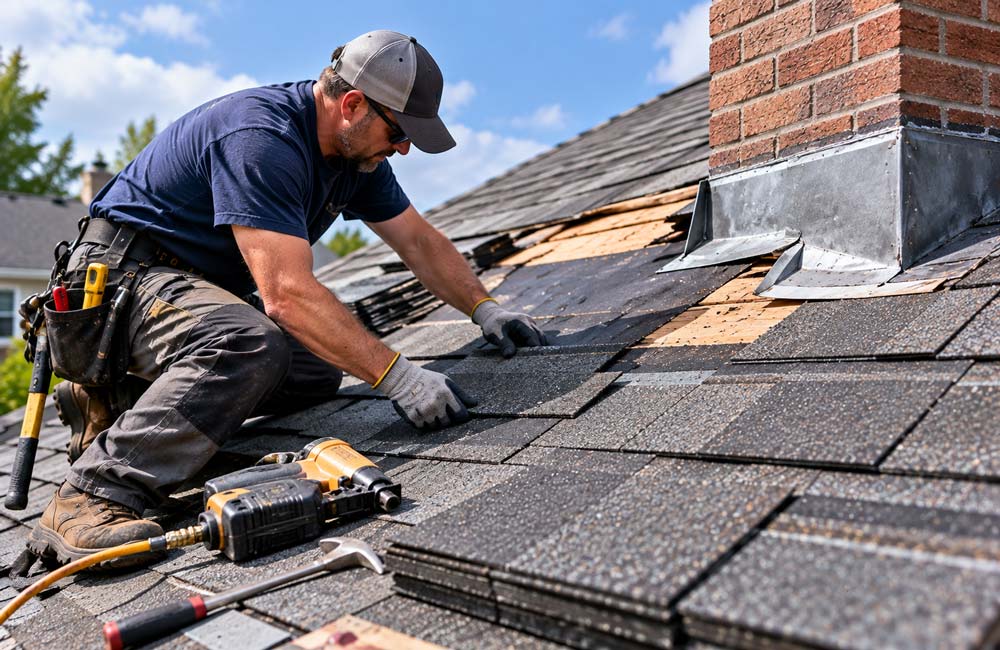
Not necessarily. A qualified roofer may recommend replacing individual shingles, repairing flashing or addressing localized damage. Widespread functional damage, compromised decking or a roof already near the end of its service life may make larger work appropriate.
Ask for photographs, a clear explanation of which areas are functionally damaged, and the reasoning behind repair versus replacement. If the recommendation is for a full replacement, consider obtaining a second independent assessment. Avoid contractors who promise a free roof or guarantee insurance approval.
BE READY FOR THE NEXT STORM
How can you reduce future storm roof damage?
Keep trees maintained by qualified professionals, address loose flashing or worn roofing before storm season, and arrange routine roof inspections when appropriate for the roof type and condition. Clear gutters and downspouts so water can drain away from the roof edge.
In hail-prone regions, ask a roofing professional whether impact-resistant materials are suitable when replacement is already needed. Product ratings may indicate performance in standardized tests, but no roof is completely hail-proof. Keep inspection and repair records for future reference.
COMMON QUESTIONS
Storm and hail roof damage FAQs
Can hail damage a roof without causing a leak?
Yes. Some impacts leave cosmetic marks, while others compromise the shingle or covering. A leak may not appear until later rainfall, and not every mark requires repair.
Can wind damage shingles without blowing them off?
Yes. Strong wind can loosen adhesive seals, lift tabs or crease shingles even when they remain attached.
Will a roof leak always appear right after a storm?
No. Rainwater can travel through concealed roof spaces, and a compromised area may not leak until a later storm.
Should I get a roof inspection after every hailstorm?
A professional inspection is sensible after significant hail or when you notice damage. Minor hail does not automatically mean the roof has been functionally damaged.
Can an insurer refuse a hail roof claim?
Coverage depends on the policy, the cause and extent of damage, exclusions, deductible and other terms. Ask your insurer for the decision and reasons in writing.
Can I repair storm roof damage myself?
Roof work involves fall and structural hazards. For damaged, steep or wet roofs, use qualified professionals rather than attempting DIY access.
Does a damaged roof need replacing completely?
Not always. The right solution depends on functional damage, material condition and whether a durable localized repair is feasible.
What if a contractor offers to pay my insurance deductible?
Be cautious. Deductible waivers and claim-related inducements may violate state laws or policy requirements. Check with your insurer and state insurance regulator before signing.
FURTHER READING
Useful US sources
- US EPA — Mold prevention and drying wet materials
- Ready.gov — Severe weather safety and preparation
- NAIC — Homeowners insurance consumer information
- IBHS — Hail research and resilient buildings
Insurance terms differ by policy and state. This article offers general information, not an insurance coverage determination.
THE BOTTOM LINE
Don't ignore suspected functional storm roof damage.
Hail and wind do not always cause leaks, and not every mark calls for a new roof. But missing shingles, damaged flashing, active water entry and unsafe areas deserve prompt professional attention. Document the damage, protect people first, contact your insurer when appropriate and repair actual defects before another storm makes matters worse.
RELATED QUESTIONS