

START HERE · INTERACTIVE GUIDE
See what happens inside a freezing pipe
Move through five stages to see how a freeze can develop. Then choose your symptoms for a practical next step.
Explore the five stages
Drag the slider, tap a stage, or use Previous / Next. These are possible stages, not a countdown.
The passage starts to narrow
Cold sections can begin to freeze while other parts still contain liquid water. A tap may still run; flow alone does not prove every pipe is clear.
- Water flow
- May reduce
- Inside the pipe
- Ice + liquid water
- What to watch
- A weaker stream
Simplified illustration—not a diagnosis, pressure measurement or prediction of when a pipe will burst. A pipe can thaw without splitting.
YOUR SITUATION
What are you noticing?
Select the closest match. If more than one applies, choose leaking water or electrical danger first.
THE CONSEQUENCE CHAIN
Why a frozen pipe can burst
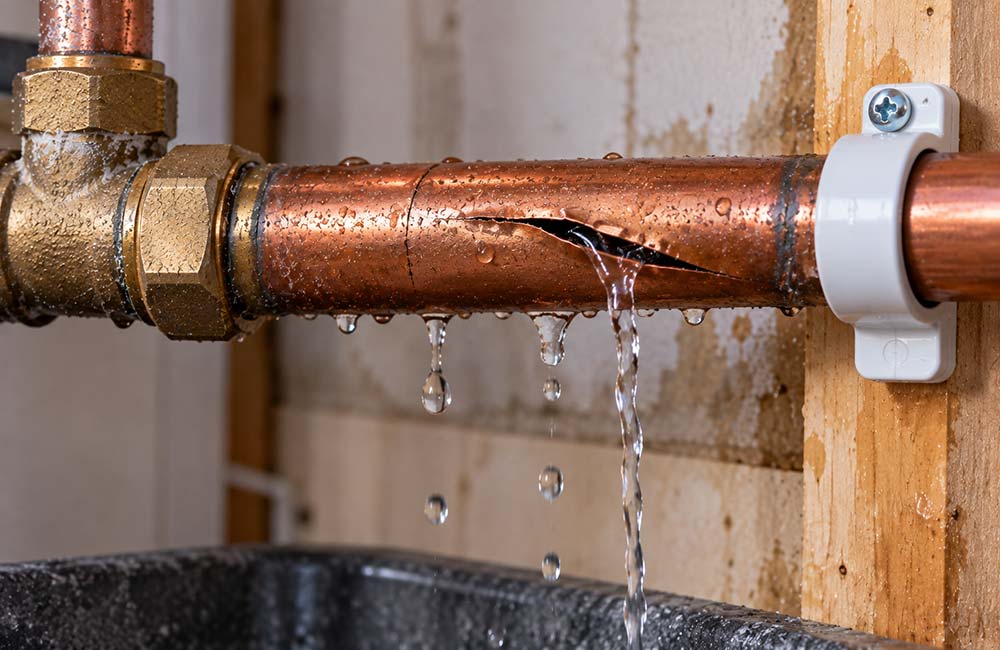
Freezing is more than a plug of ice blocking a tap. As ice grows, water trapped between the blockage and a closed outlet can come under increasing pressure. A weak section or joint may fail. The split does not have to be exactly where you first notice frost.
Cold draughts and unheated spaces make some sections more vulnerable than others.
Growing ice can trap water and create damaging pressure.
This is a possible outcome, not an inevitable stage of every freeze.
As ice clears, water can escape through damage that was not previously obvious.
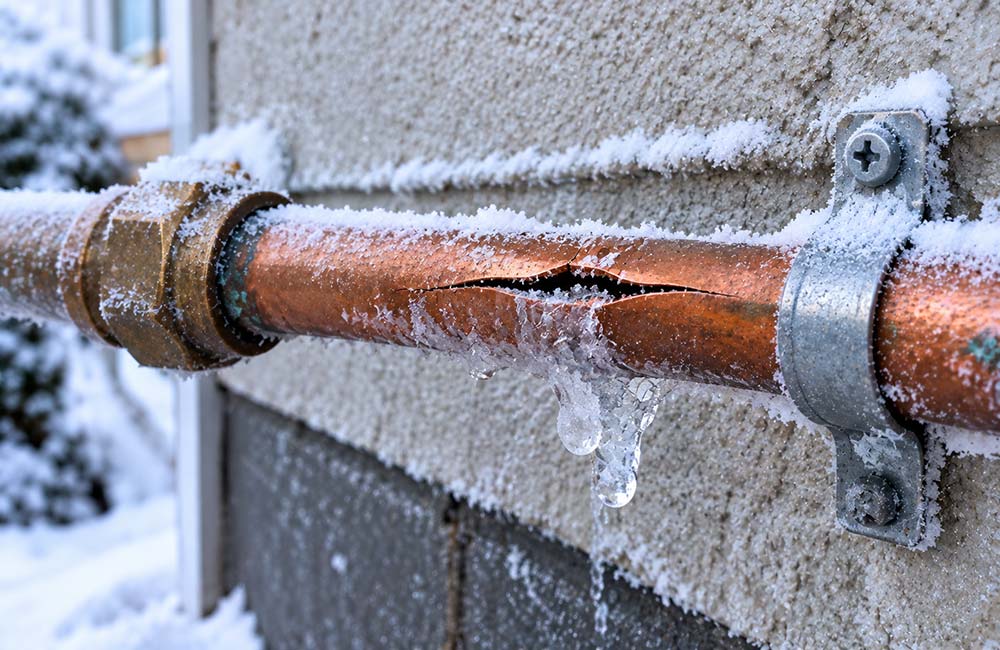
SPOT THE CLUES
How can you tell if your pipes are frozen?
A weak or stopped tap
A sudden change during freezing weather is a clue, especially if other taps still work.
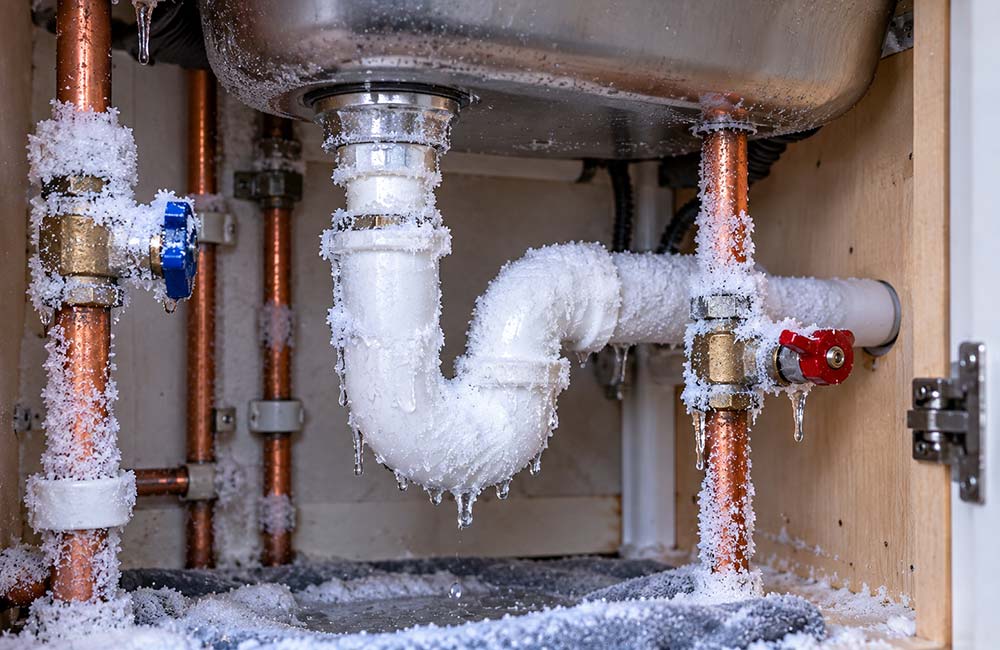
Exposed cold pipework
Check accessible pipes in exterior walls, garages and other unheated areas.
Water where it should not be
New damp patches or pooling may mean there is already a leak.
Several outlets affected
A shared supply section—or a water-company outage—may be involved.
No water does not prove freezing. Check your supplier's outage information; do not assume every loss of pressure has the same cause.
ACT EARLY
What should you do first?
- Look for immediate danger. Keep clear of flooded areas containing electrical equipment. Do not touch a wet switch, plug or appliance. Seek urgent help; call emergency services for immediate danger.
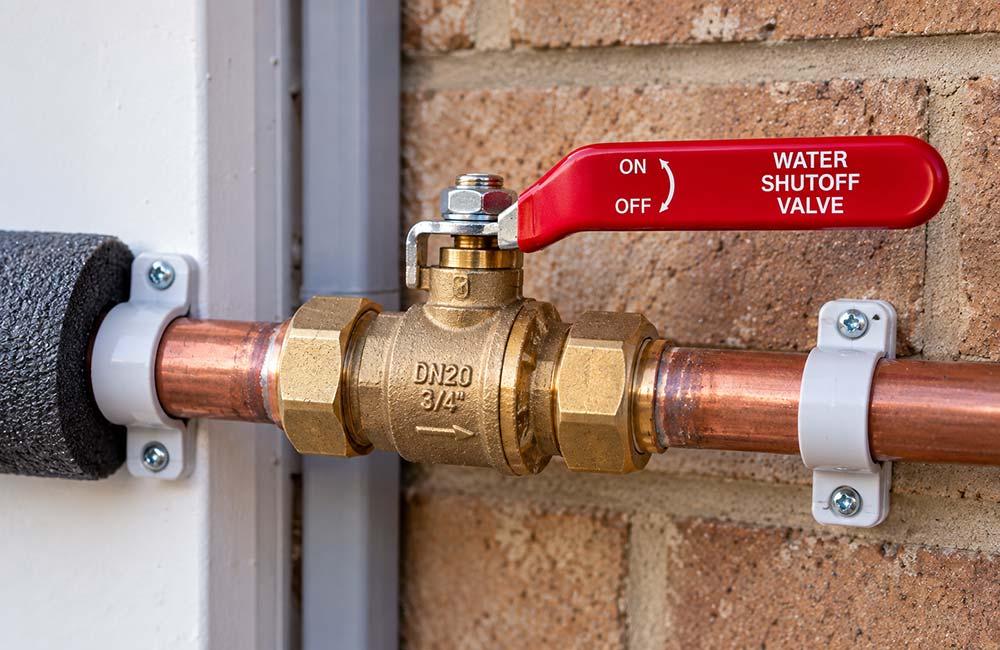
- Find the water shutoff. If a pipe is split or leaking, close the supply valve only if you can reach it safely. Ask your utility or plumber for help if you cannot isolate it.
- Get help with hidden or uncertain faults. Call a qualified plumber if you cannot locate or safely reach the frozen section, or if gentle thawing does not restore flow.
- Tell the right person. If you rent, report the problem promptly to your landlord or emergency maintenance service.
For an existing rupture, continue to what happens if a pipe bursts.
GENTLE WARMTH
Can you thaw a frozen pipe yourself?
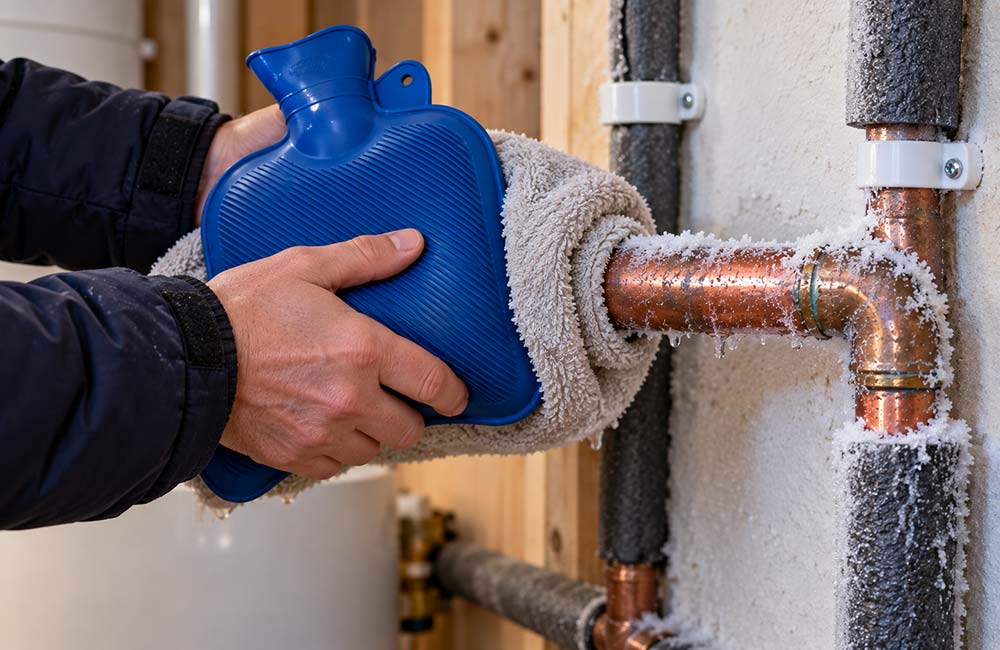
Only consider this for an easily accessible, undamaged pipe in a safe, dry area. Gentle warmth from a warm-water bottle or warm towels can help. Start near the tap and work back along the affected section. Never use a flame or intense direct heat.
US Red Cross guidance says to keep the affected faucet open during thawing. NI Water advises isolating the supply first and warns against leaving taps running where drains may be frozen. Follow your local water provider's instructions for your system; never leave thawing unattended.
If a heating or hot-water system is affected, contact a plumbing/heating professional before operating it. These systems need more specific advice than a cold-water pipe.
FLOW RETURNING IS NOT THE FINAL CHECK
What happens when the ice melts?
Check accessible pipework, fittings and nearby surfaces for leaks as flow returns. Water at one tap does not prove every frozen section has cleared. If a new leak appears, isolate the supply safely and get professional help.
A successful thaw is also a chance to fix the cause: an unprotected section, missing insulation or a cold draught. Simply waiting for the next cold spell leaves the same vulnerability in place.
BEFORE THE NEXT COLD SPELL
Reduce the chance of another freeze
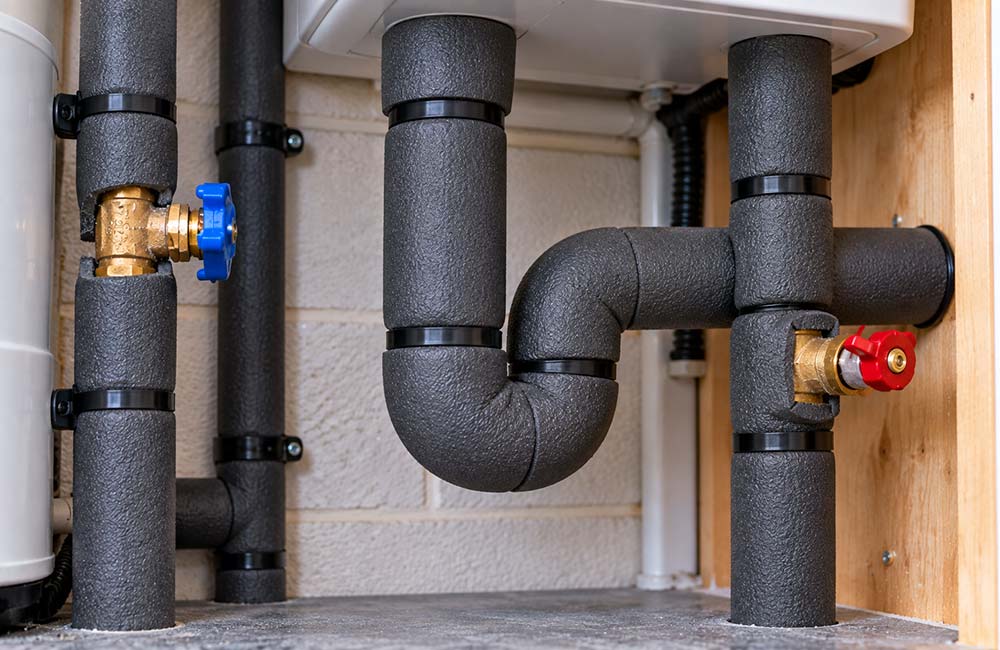
- Insulate vulnerable pipes, including bends and fittings.
- Seal cold draughts near pipework without blocking required ventilation.
- Keep suitable background heating in cold weather; arrange checks if the home is empty.
- Know where the shutoff valve is before you need it.
- Ask a plumber about winterising a property left unheated for a long period.
Insulation slows heat loss; it does not generate heat or guarantee protection through prolonged extreme cold.
COMMON QUESTIONS
The details people often wonder about
Do frozen pipes always burst?
No. Freezing can damage a pipe, but it does not guarantee a rupture. Treat the problem promptly rather than assuming a pipe that has not leaked is safe.
How long before a frozen pipe bursts?
There is no reliable countdown for an individual home. Exposure, insulation, plumbing layout and pipe condition vary. That is why the explorer shows stages rather than hours.
Can pipes freeze even with the heating on?
Yes. A warm room may not adequately protect pipework in an exterior wall, garage or other cold space.
Should I just wait for warmer weather?
Do not leave suspected frozen pipework unattended. Thawing may reveal a split, and more than one section can be affected. Contact a plumber if you cannot assess the situation safely.
SOURCES & CHECKS
Where this guidance comes from
Checked 6 October 2026. The explorer explains possible stages; it does not inspect your plumbing. Local water-provider and professional advice takes priority for your installation.
- American Red Cross — preventing and thawing frozen pipes
- National Weather Service — cold-weather home preparation
- National Weather Service — checks after extreme cold
- NI Water — winter protection, frozen pipes and burst pipes
- CIPHE — frozen-pipe and heating-system precautions
- CIPHE — frozen and burst pipe FAQs
- Water UK — protecting homes during a thaw
BOTTOM LINE
A frozen pipe is a warning, not a guaranteed burst.
The useful question is what you can see now: reduced flow, a possible blockage or an actual leak. Act on those signs, use gentle methods only where safe, and check again when the ice clears.