

START HERE · INTERACTIVE EMERGENCY GUIDE
A pipe has burst — what should you do first?
Work through the steps in order. The guide separates actions you can normally take yourself from situations where you should keep away and get professional help.
Follow the emergency sequence
Tap a step, move the slider, or use Previous / Next. Start at Step 1 unless electrical danger makes the area unsafe.
Check where the water is going
Before approaching the leak, look for water around sockets, appliances, lighting, the consumer unit or other electrical equipment. Do not enter an unsafe wet area.
- Priority
- Personal safety
- Action
- Keep clear of hazards
- Next
- Locate the stop valve
This guide is general emergency information. Plumbing and electrical systems vary. Do not enter an unsafe area or attempt work beyond your competence.
YOUR SITUATION
What are you dealing with right now?
Choose the closest situation for a focused next step. If more than one applies, choose the most dangerous condition first.
THE FIRST FEW MINUTES
Stopping the flow limits the damage
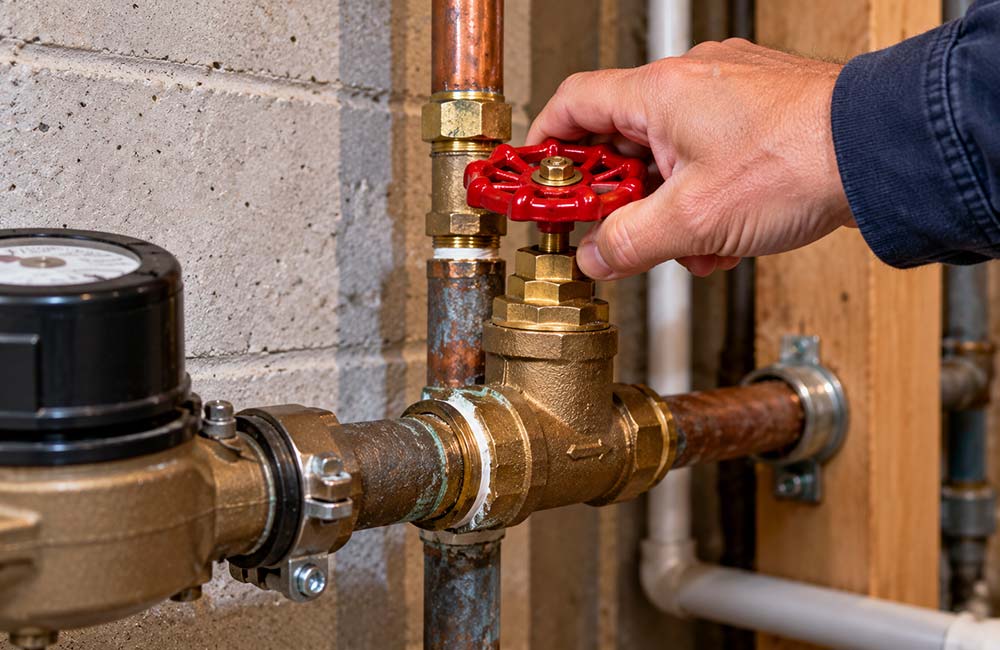
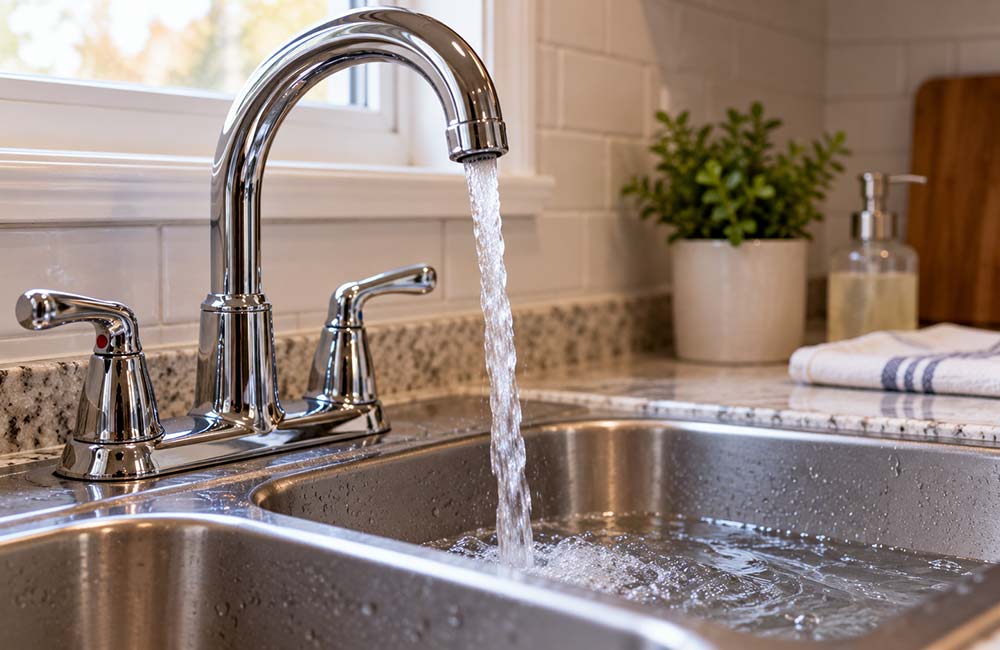
For a burst on your property's plumbing, the key control is usually the internal stop valve. NI Water advises turning off the stop valve, using towels or thick cloths to help contain escaping water, opening taps to reduce flooding, and contacting a plumber. Once repairs are complete, remember to close the taps again.
Keep away from unsafe water around electrical equipment.
Use the internal stop valve if it is safely accessible.
Follow local water-provider guidance for draining the system.
The damaged pipe needs a proper repair before normal use resumes.
THE MOST IMPORTANT HAZARD
What if the water reaches electrical equipment?
Treat water around electrical wiring, sockets, switches, appliances or the consumer unit as a safety issue. Do not stand in water to reach a switch and do not touch wet electrical equipment. If it is safe to isolate the electricity without entering the affected area, follow appropriate local emergency guidance; otherwise keep away and obtain professional help.
Do not assume electrical equipment is safe just because it has dried on the surface. Electrical Safety First recommends assessment by a registered electrician after flood damage, with affected wiring and equipment repaired or replaced as necessary.
WHY SPEED MATTERS
What can a burst pipe damage?
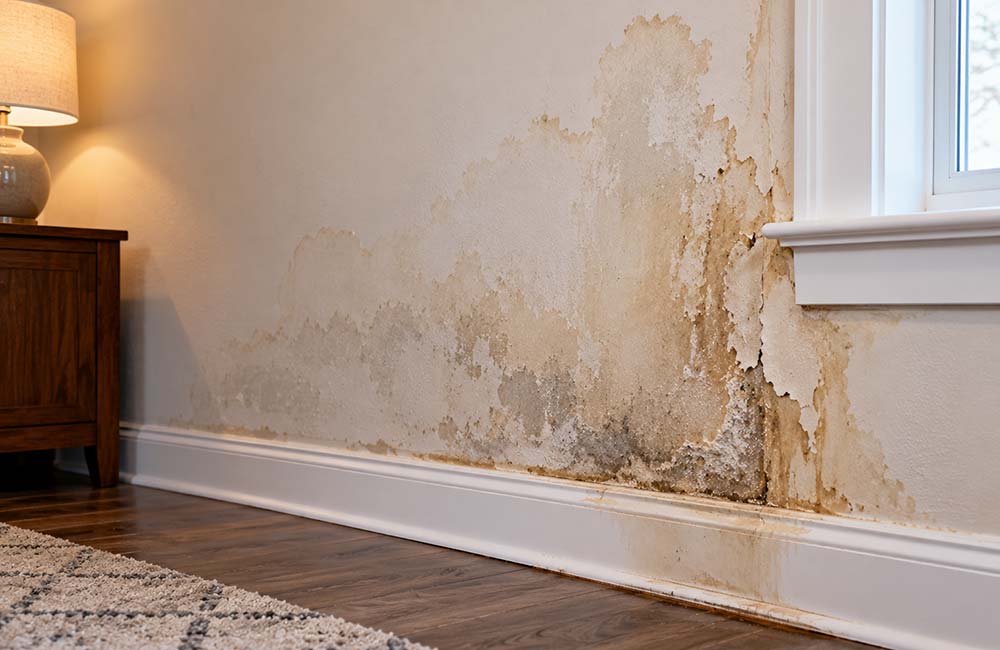
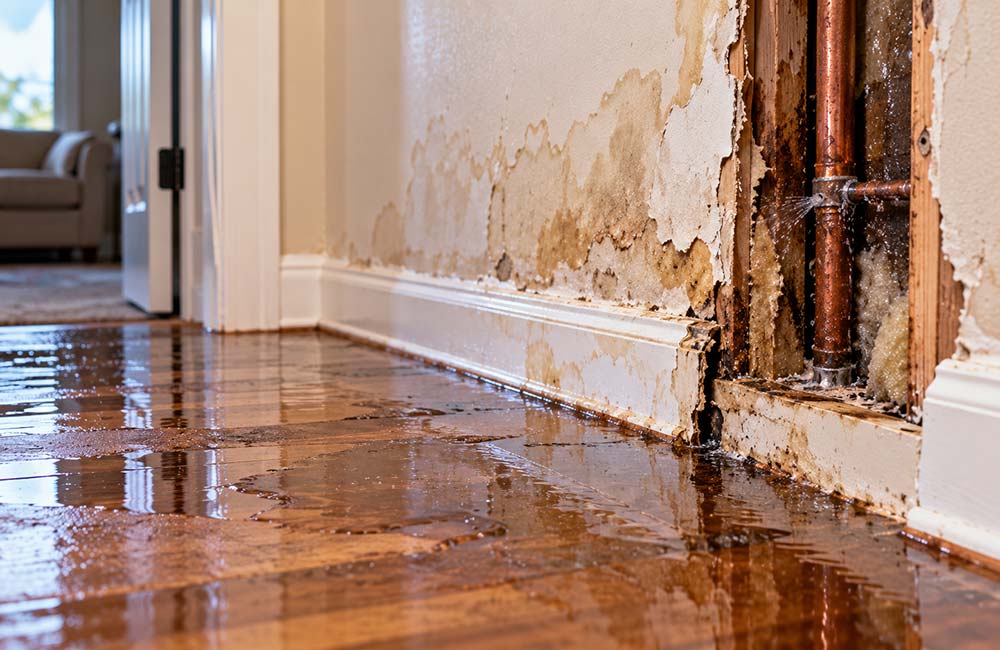
Escaping water can spread beyond the room containing the failed pipe. It can soak flooring, plasterboard, insulation, cabinets and belongings, pass through ceilings, and reach electrical installations. The amount of damage depends on the flow rate, how long the leak continues and where the water travels.
Water spreads across nearby surfaces and into gaps.
Porous materials can absorb water and staining may spread.
Drying, repairs and checks may be needed even after the pipe itself is fixed.
AFTER THE EMERGENCY
The leak has stopped. What happens next?
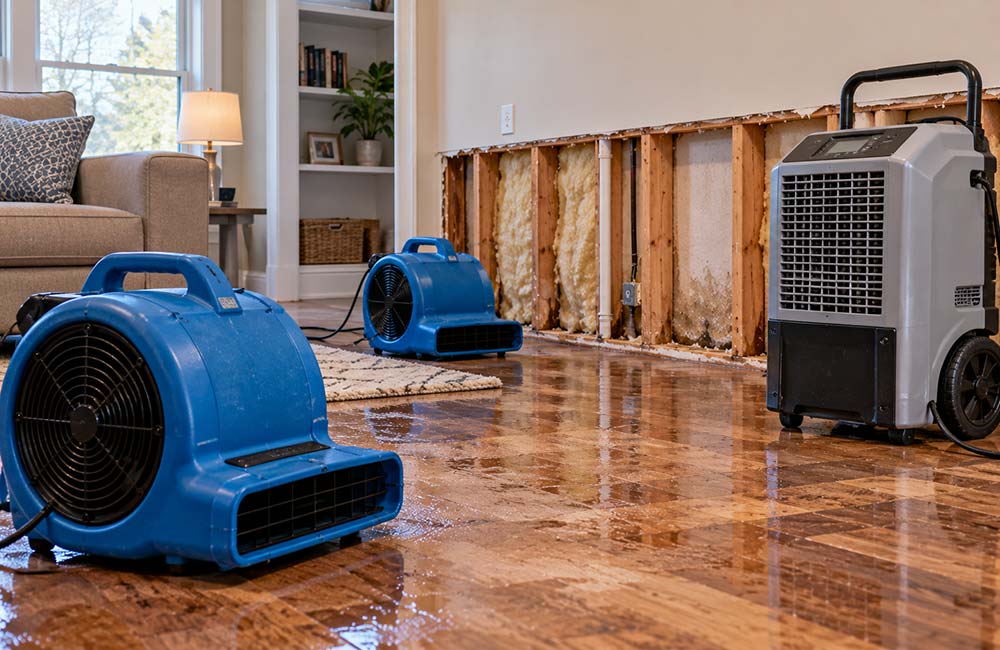
Stopping the water is only the first stage. The pipe needs a permanent repair, and wet parts of the building may need controlled drying. Remove standing water only when the area is electrically safe. Move undamaged belongings away from the wet area where practical, ventilate appropriately, and arrange professional drying or restoration for substantial water damage.
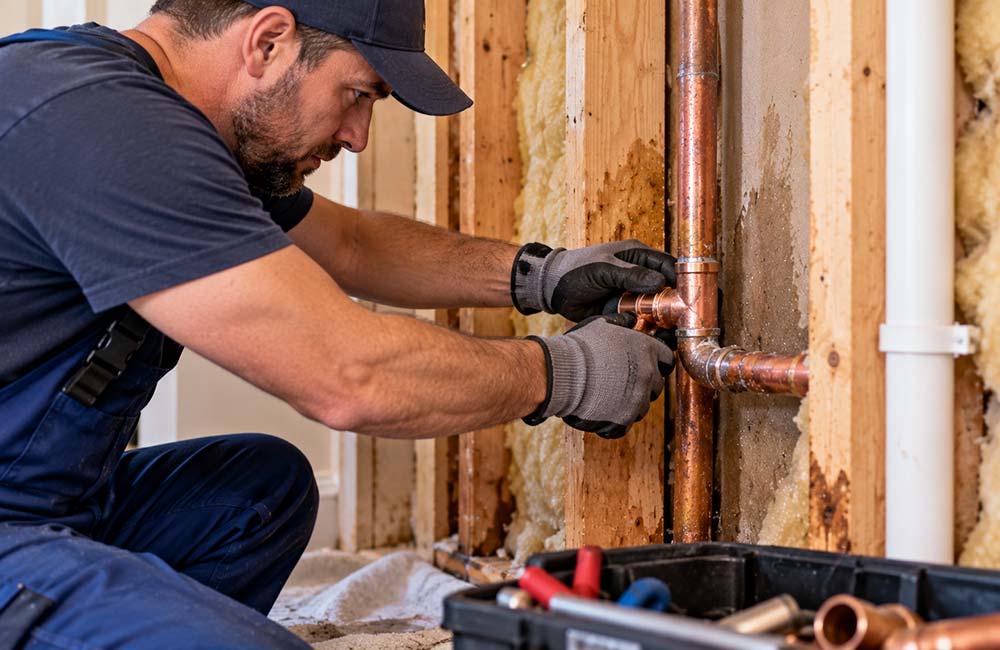
Repair the pipe. Do not restore normal pressure to damaged plumbing until it has been repaired.
Check the surrounding area. Water may have travelled behind surfaces.
Dry properly. Persistent moisture can cause further deterioration and mould growth.
Check affected electrics. Use a registered electrician where water has reached the electrical installation or equipment.
KEEP A RECORD
Should you photograph the damage?
For a substantial incident, photographs can help document what happened before damaged materials are removed. Record the affected rooms, visible water damage and damaged belongings where it is safe to do so. Contact your insurer promptly and follow its instructions before arranging non-emergency restoration work.
Report the burst and damage to your landlord or emergency maintenance contact promptly. Your own belongings may be covered separately from the building itself, depending on the insurance arrangements.
BE READY NEXT TIME
Reduce the risk and the potential damage
- Know where the internal stop valve is and make sure it can be operated.
- Insulate vulnerable water pipes, including bends, valves and fittings.
- Deal with dripping taps and existing plumbing leaks.
- Follow appropriate winter precautions when a property will be empty.
- Keep a plumber's contact details somewhere accessible.
- Check your insurance arrangements before you need to make a claim.
If the burst followed freezing weather, see what happens if your pipes freeze for the freezing and thawing stages.
COMMON QUESTIONS
The details people often need quickly
Where is my water shutoff valve?
In many homes the internal stop valve is near where the water supply enters the property, often beneath the kitchen sink, although it can be in a utility room, garage, basement or another location. Learn where yours is before an emergency.
Should I turn off the electricity?
If water may contact electrical wiring or fittings, electricity can become a serious hazard. Do not enter water or cross a wet area to reach the consumer unit. If isolation cannot be done safely from a dry location, keep away and obtain professional help.
Can I repair a burst pipe myself?
A temporary measure may slow a leak, but a damaged pressurised water pipe should receive a reliable permanent repair. If you are uncertain about the system or the damage, use a qualified plumber.
Can a pipe burst without freezing?
Yes. Freezing is one cause, but pipe deterioration, damaged joints, excessive pressure, accidental damage and other plumbing faults can also lead to leaks or ruptures.
Why is water still dripping after I shut it off?
Water already stored in the pipework or elsewhere in the system can continue to drain after the incoming supply is closed. If substantial flow continues or you are unsure the supply is isolated, contact a plumber or your water provider.
SOURCES & CHECKS
Where this guidance comes from
Checked 6 October 2026. Emergency procedures vary with the plumbing and electrical system, building type and location. Local utility and qualified professional advice takes priority.
BOTTOM LINE
A burst pipe becomes a property emergency because the water keeps moving.
First protect people from electrical and other hazards. Then stop the water if you can do so safely, get the damaged pipe repaired, and check how far the water has travelled. Fast action can reduce the damage, but a dry-looking surface does not always mean the building or electrics underneath are unaffected.