

START HERE · INTERACTIVE GUIDE
See what happens as a gutter fills up
Move through five stages of neglect. The photograph, explanation and risk indicators change together so you can see why a gutter that looks only slightly untidy can eventually stop draining properly.
Move from clear to badly clogged
Drag the large handle, tap a stage, or use Previous / Next.
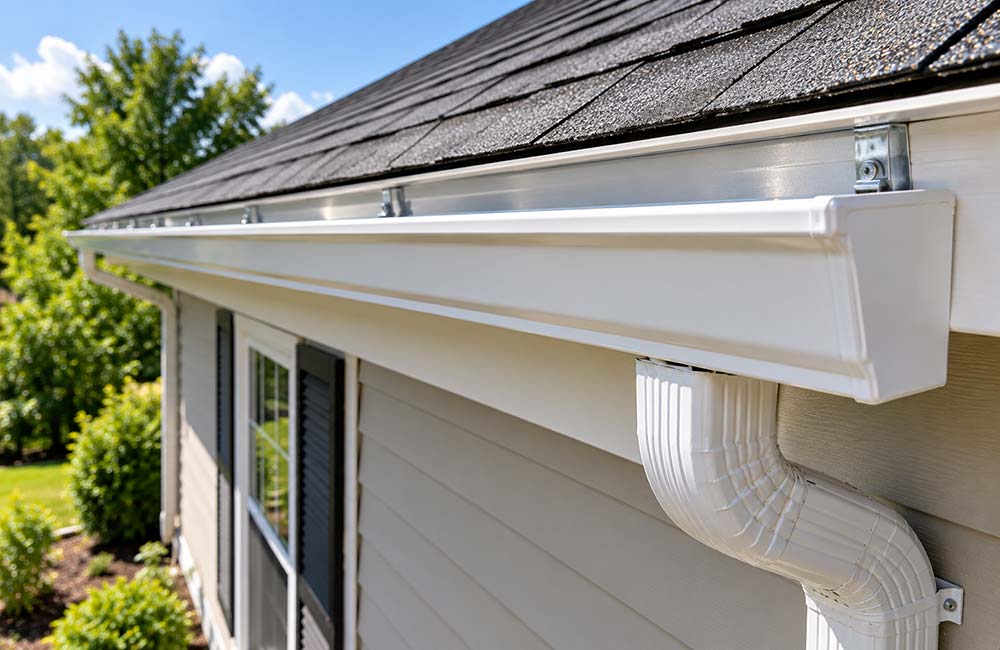
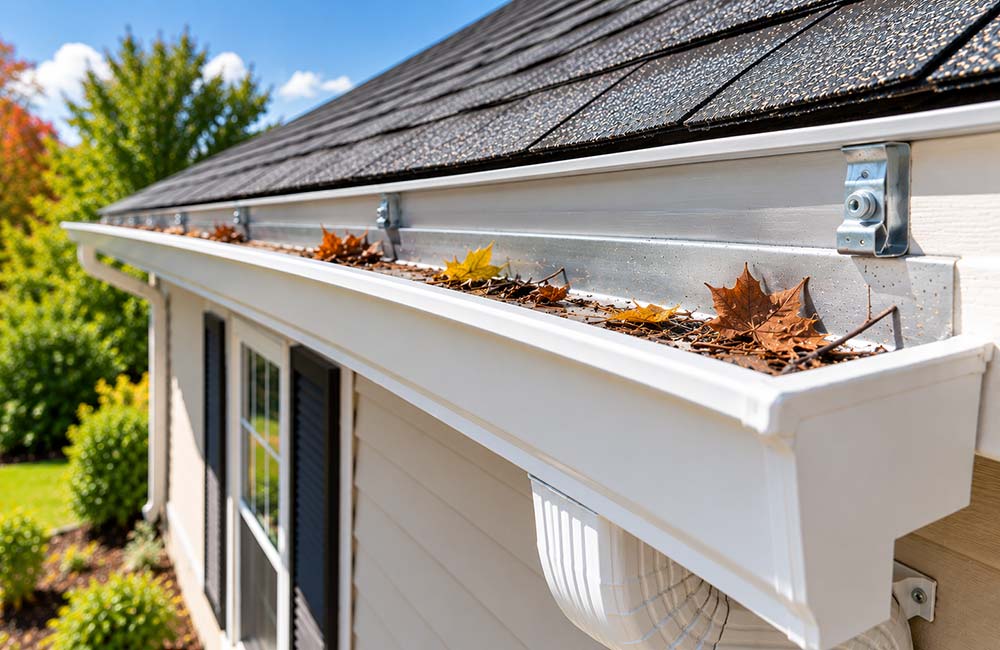
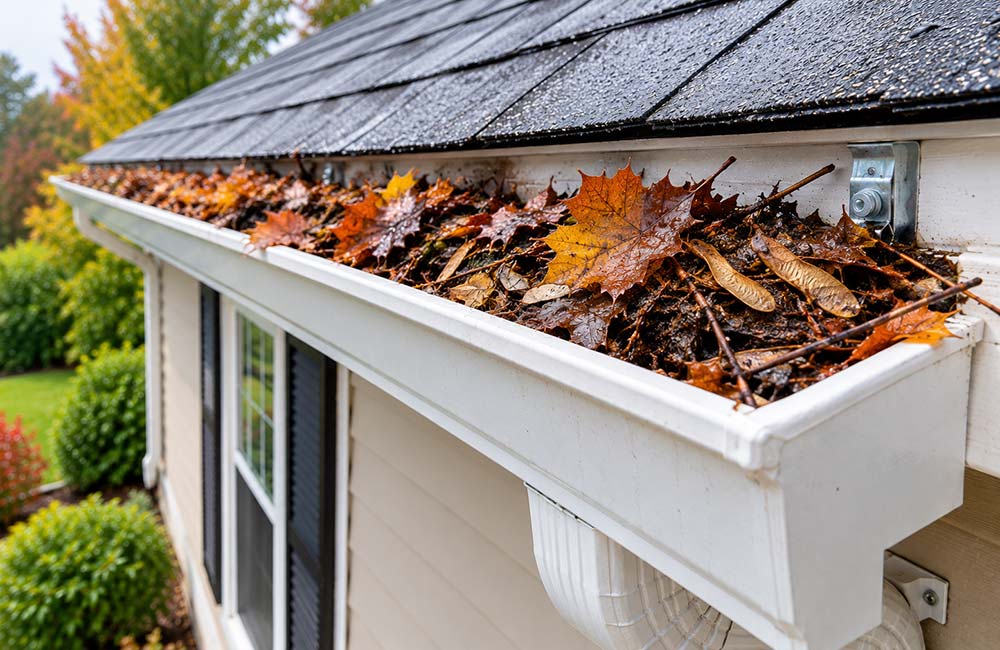
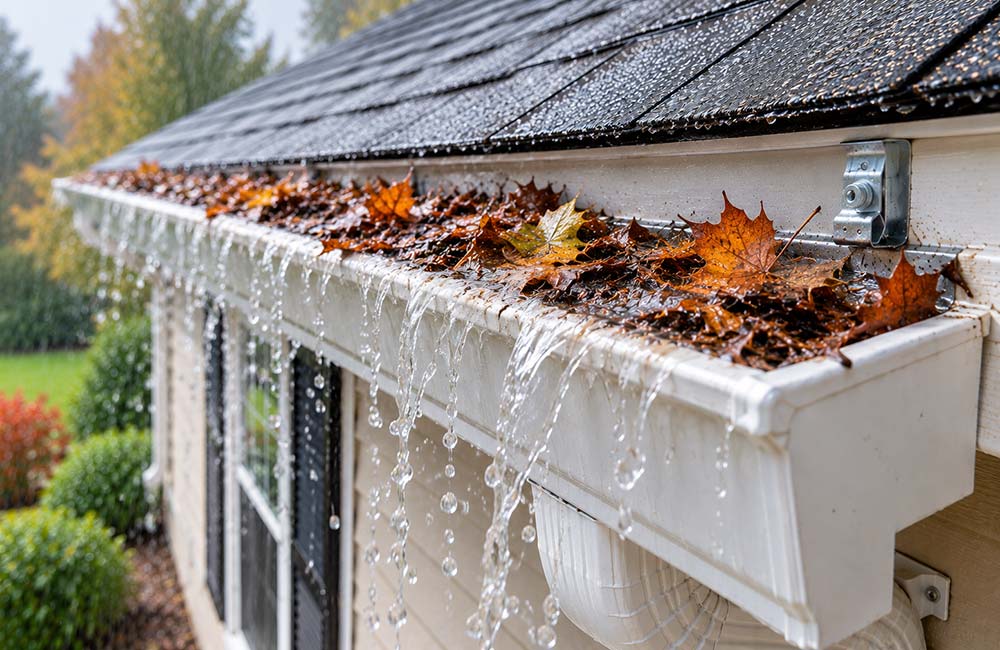
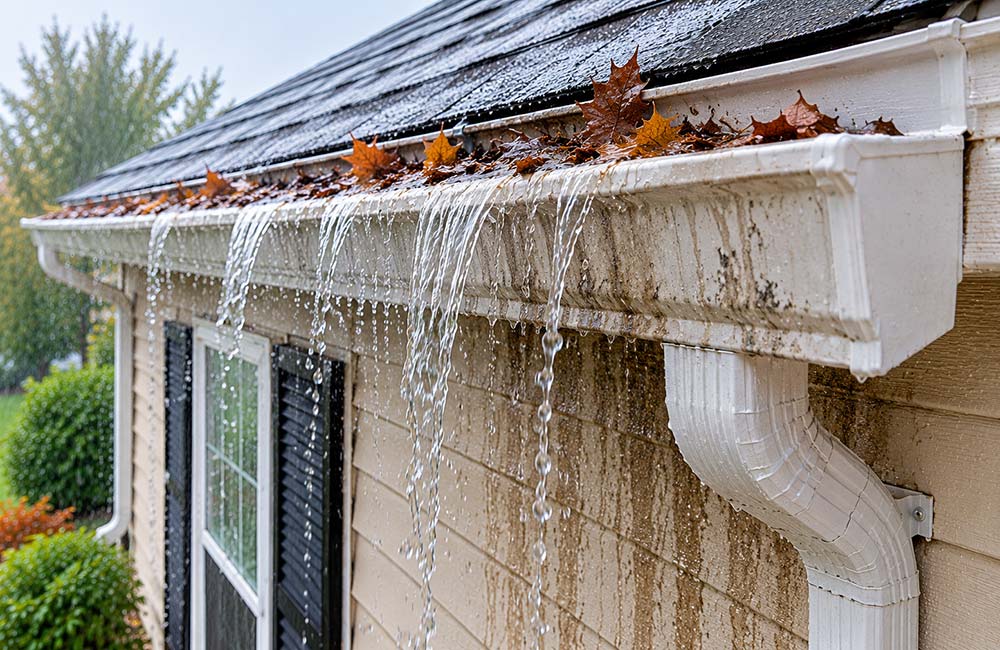
Rainwater has an open route to the downspout
A clear gutter collects roof runoff and directs it toward the outlet instead of over the front or back edge.
- Flow
- Clear
- Main risk
- Low
- Action
- Keep it clear
This is a general visual guide rather than a damage predictor. Roof shape, gutter capacity, rainfall, downspouts and site drainage all affect what happens at a particular home.
CATCH IT EARLY
What are the warning signs of clogged gutters?
You do not need to wait for obvious damage. Leaves visible above the gutter, plants growing in debris, water marks on the fascia, staining beneath joints, sagging sections, or water spilling over during rain all suggest the drainage path needs attention.
Look for debris, sagging and blocked outlets.
Watch for water spilling over edges or behind the gutter.
Check for persistent wet patches near the roof edge or foundation.
THE WATER STILL HAS TO GO SOMEWHERE
What happens when a gutter overflows?
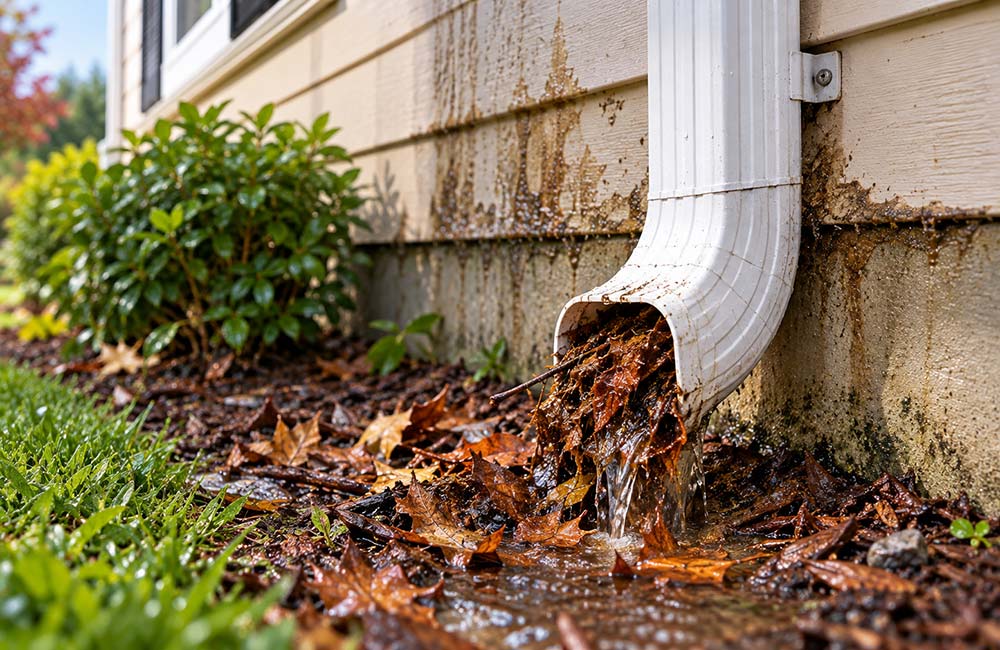
Roof runoff normally enters the gutter and travels to a downspout. When debris blocks that route, water can spill over the gutter edge, run down exterior surfaces or collect where the gutter meets the roof edge. Heavy rain makes the problem much more obvious.
The U.S. Department of Energy's Building Science Education guidance emphasizes gutters and downspouts as part of a drainage system that moves roof water away from the home. That matters because concentrated roof runoff can saturate soil beside a building if it is not carried away effectively.
REPEATED WETTING
Can clogged gutters damage fascia and soffits?
They can contribute. If overflow repeatedly wets the roof edge, painted wood and other vulnerable materials can stay damp longer than intended. Warning signs include peeling or blistering paint, staining, soft or deteriorated material and water marks around the gutter line.
DOWN AT GROUND LEVEL
Can gutter overflow affect the foundation area?
One purpose of the gutter-and-downspout system is to manage a large volume of roof runoff. DOE building-science guidance notes that water not drained away from a house can saturate soil around the building and contribute to moisture problems. A clear gutter therefore only solves part of the problem—the downspout also needs to discharge appropriately for the property.
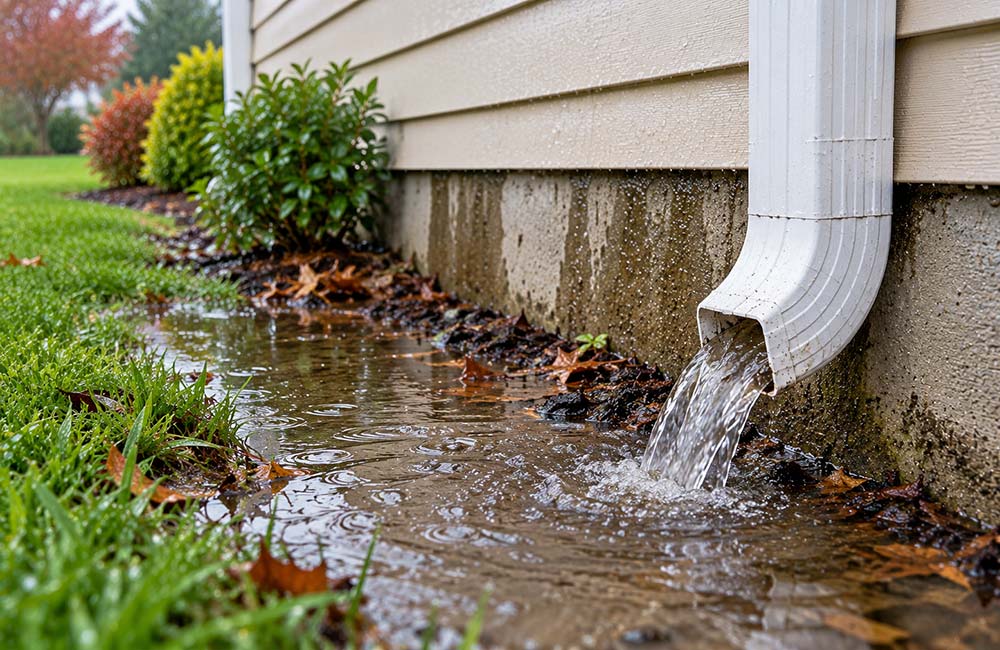
If the gutter is clear but water still collects beside the house, inspect the downspout outlet, extensions and ground drainage rather than assuming more gutter cleaning will solve it.
COLD-WEATHER EFFECTS
What happens in winter?
FEMA recommends keeping gutters clear of leaves, sticks and other debris so melting snow can drain. Blocked gutters can worsen winter drainage and contribute to heavy ice and icicles around the roof edge.
Clogged gutters are not the fundamental cause of every ice dam. Ice dams form when snow melts on warmer parts of a roof and refreezes near a colder edge. University of Minnesota Extension identifies roof heat loss, snow cover and outdoor temperature as key factors. Clear gutters help drainage, but insulation and air sealing may also need attention.
CLEAR IT — BUT DON'T CREATE A NEW HAZARD
Should you clean gutters yourself?
Only if the gutter can be reached and worked on safely with suitable equipment and you are comfortable doing so. Working at roof height introduces a fall risk. Steep roofs, high gutters, awkward ground, overhead electrical hazards or uncertainty about safe access are good reasons to use an appropriate professional.
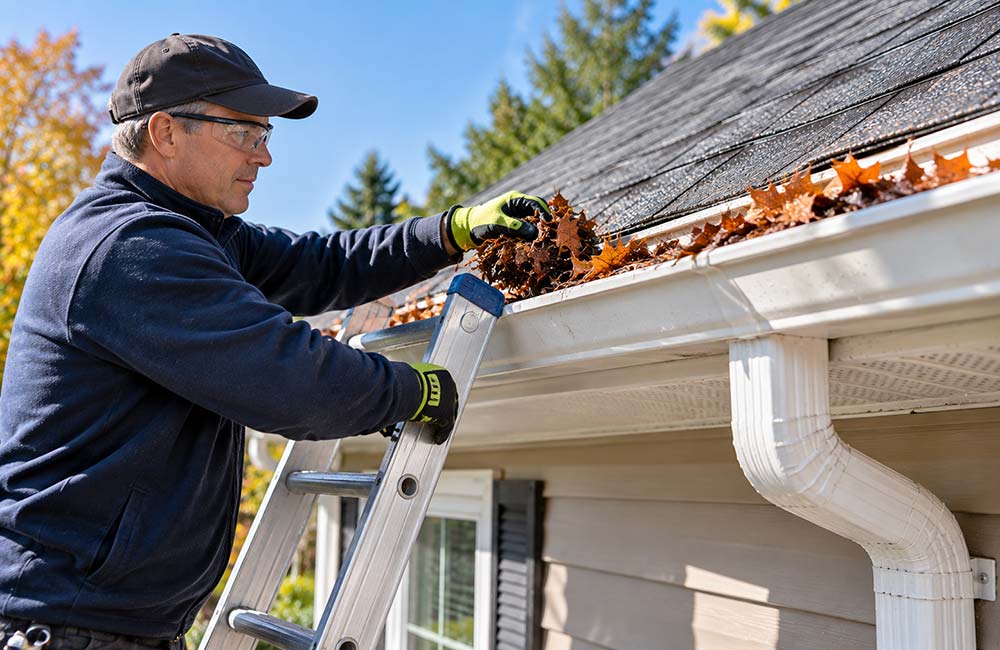
Remove debris. Clear leaves, twigs and compacted material.
Check the outlet. Make sure water can enter the downspout.
Check the run. Look for sagging, loose fasteners or damaged joints.
Check discharge. Confirm the downspout sends water to a suitable location.
THERE ISN'T ONE PERFECT CALENDAR
How often should gutters be checked?
The useful answer is based on conditions rather than an arbitrary nationwide number. Homes beneath deciduous trees may collect debris quickly in fall; pine needles, seed pods, storms and nearby vegetation can create different schedules. Inspect often enough that the gutter does not reach the blocked and overflowing stages shown above, and check again after unusually heavy debris or severe weather.
Gutter guards may reduce the amount of larger debris entering some systems, but they do not make the roof-drainage system maintenance-free. The gutter, guard and downspout still need periodic inspection.
COMMON QUESTIONS
What homeowners often want to know
Can clogged gutters cause a roof leak?
Overflow and backed-up water can contribute to moisture at the roof edge, but a roof leak can have many causes. If water is entering the house, inspect the roofing, flashing, roof edge and drainage system rather than assuming the gutter is the only problem.
Can clogged gutters cause basement moisture?
They can contribute if overflow or poorly discharged downspouts concentrate roof water beside the foundation. Basement moisture can also have other causes, so the entire drainage and moisture pathway should be considered.
Will gutter guards mean I never need to clean the gutters?
No. Guards can reduce some debris, but fine material can still accumulate and outlets or downspouts can still need inspection. The guard itself may also need cleaning.
Why does my gutter overflow even though it looks clean?
The downspout or outlet may be blocked, the gutter may have an incorrect slope, a joint may have failed, or the gutter may be undersized for the roof area and rainfall intensity. A clean channel does not guarantee the whole drainage system is working correctly.
Are overflowing gutters always an emergency?
Usually not, but active water entry into the home, unsafe electrical exposure, falling gutter components or other immediate hazards deserve prompt attention. Persistent overflow should still be corrected before repeated wetting causes further problems.
SOURCES & CHECKS
U.S. guidance used for this page
Checked 6 October 2026. Building design, climate, drainage and local codes vary, so property-specific professional advice can take priority.
- U.S. Department of Energy — Foundation Drain, Gutters & Downspouts
- U.S. Department of Energy — Building enclosure and moisture flow
- FEMA — Tips for Households to Become Winter Ready
- University of Minnesota Extension — Dealing with and preventing ice dams
- U.S. EPA — Urbanization and Stormwater Runoff
BOTTOM LINE
Neglected gutters turn controlled roof drainage into uncontrolled runoff.
A few leaves are not instant property damage. The problem develops when debris restricts the drainage path enough for water to back up or overflow. Keeping the gutter, outlet and downspout working together helps move roof runoff away from vulnerable parts of the house.