

START HERE · INTERACTIVE GUIDE
See how a roof leak can develop
Move through five possible stages. The photographs show what may happen if water keeps entering—not a fixed timeline or a prediction for every home.
From a small opening to major damage
Drag the oblong handle, select a stage or use Previous / Next.
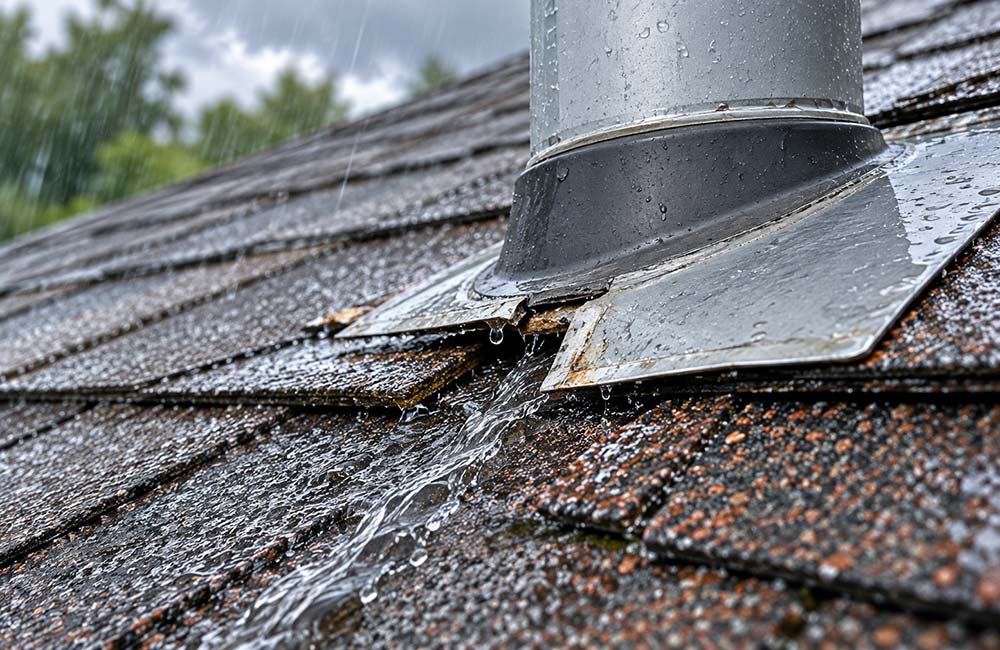
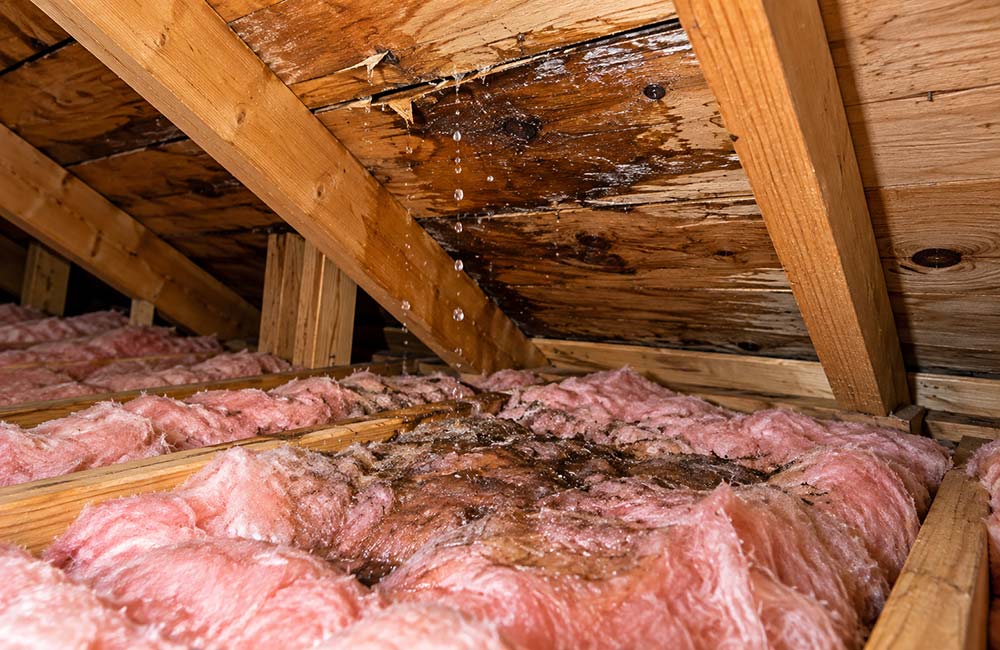
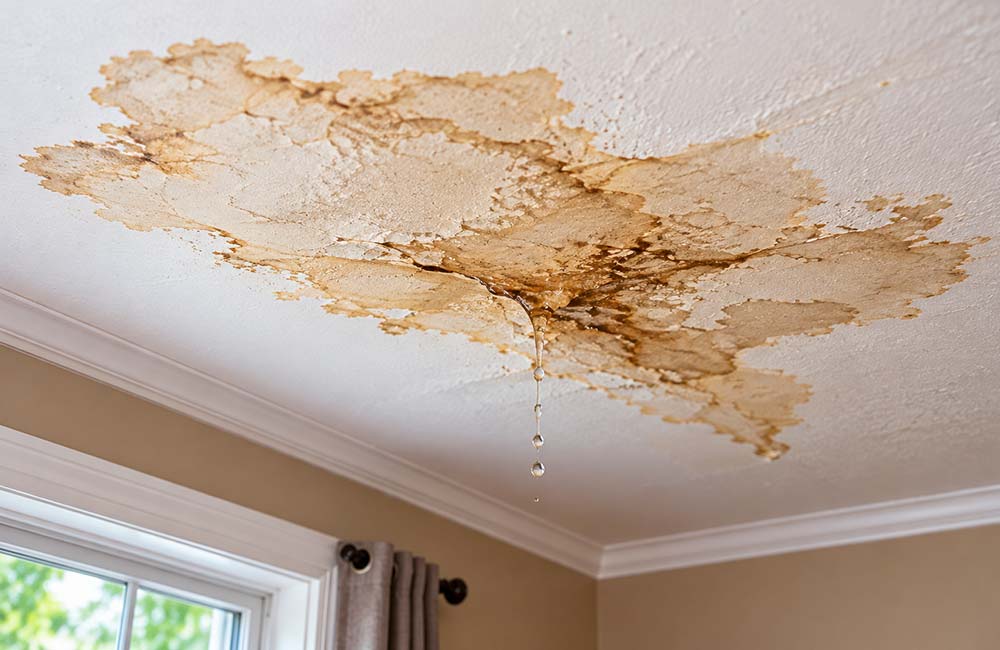
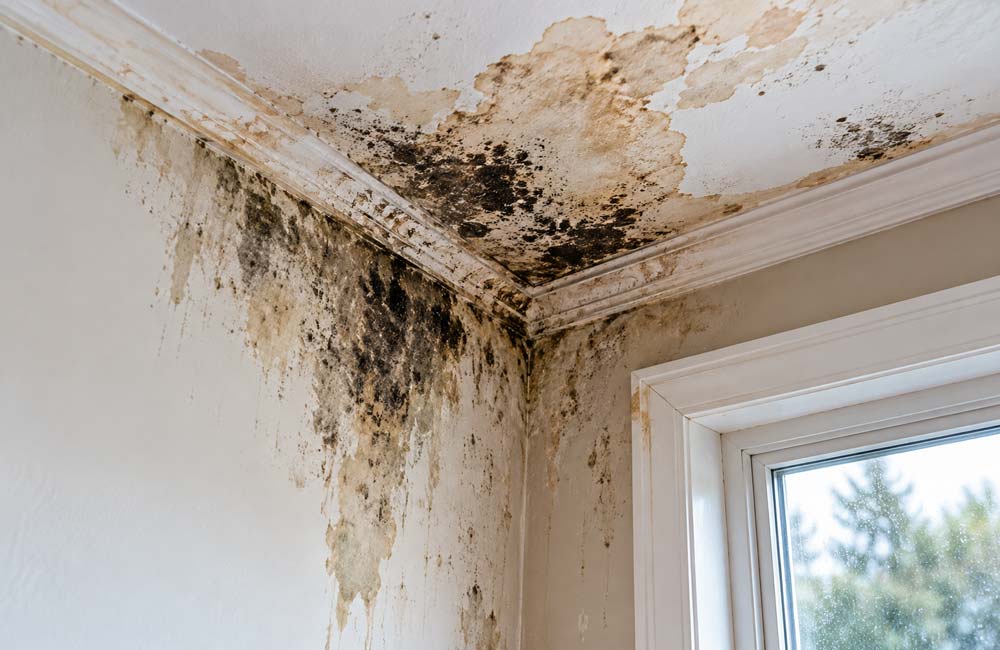
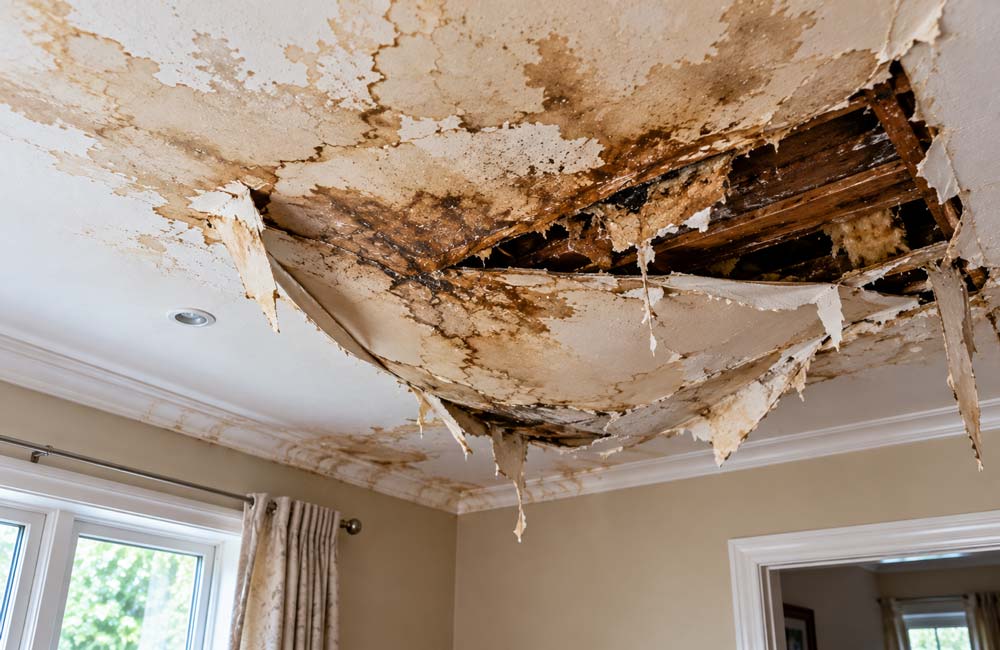
A small defect lets rainwater enter
A gap around flashing, a damaged shingle or another roof defect can admit water during rain.
- Visibility
- Often hidden
- Main concern
- Water entry
- Next step
- Arrange inspection
Stages are illustrative. Damage can happen in a different order or much faster during severe weather.
STEP 2 · YOUR SITUATION
Where is the leak showing?
Select the closest sign for focused safety-first guidance.
Your next-step guidance will appear here.
EARLY WARNING SIGNS
How can you tell your roof is leaking?
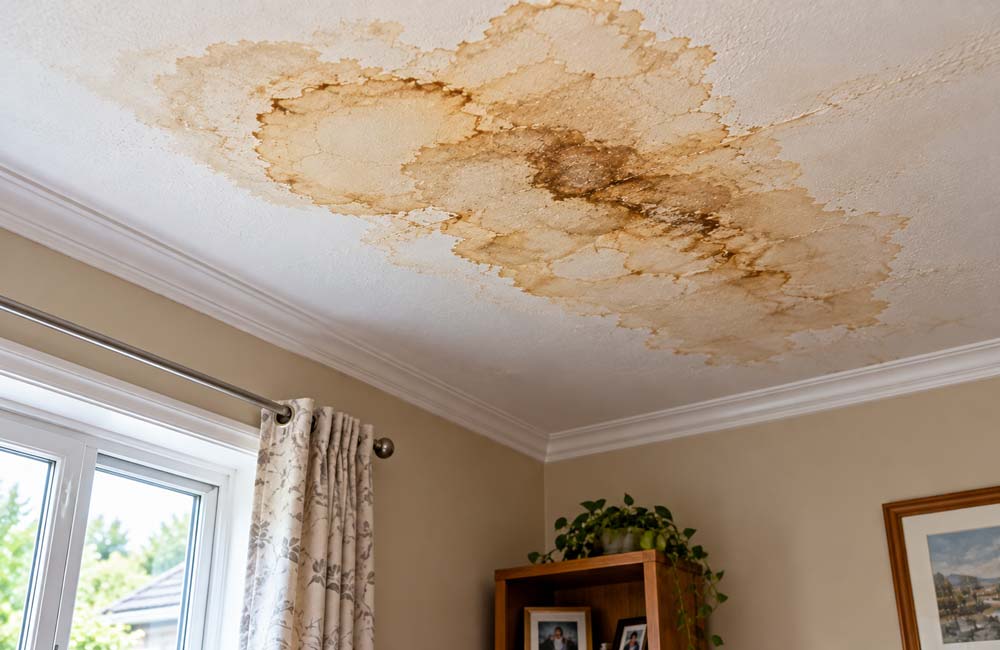
Brown ceiling stains, peeling paint, musty odors, damp attic insulation or dripping during rain may point to a roof leak. The water may travel along framing before it becomes visible, so the stain does not always sit directly beneath the roof defect.
FIND THE ENTRY POINT
Where do roof leaks usually start?
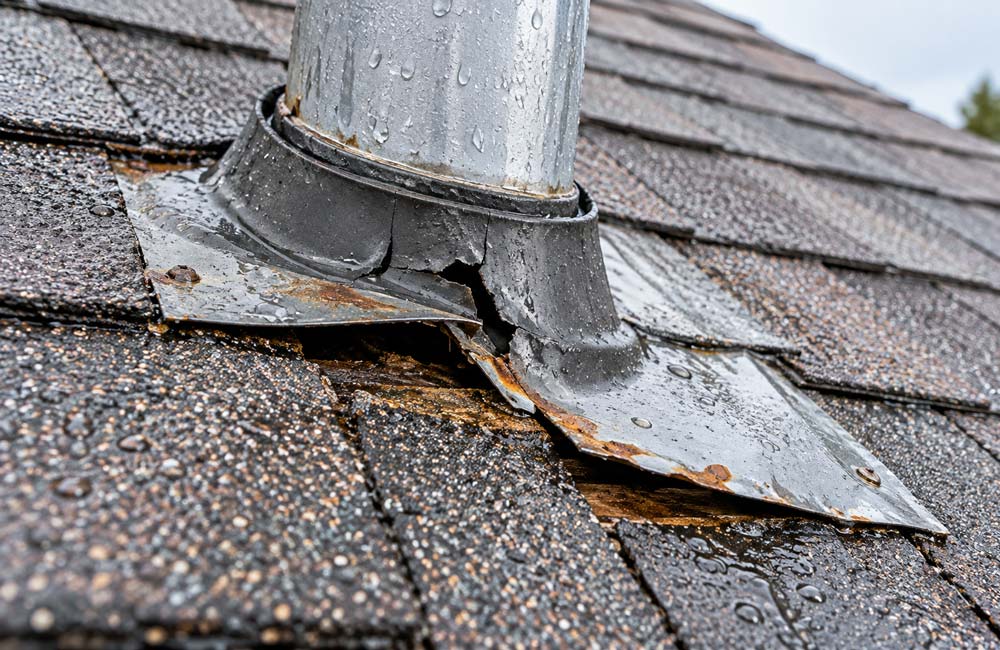
Damaged shingles, deteriorated seals, roof valleys, flashing around chimneys and vents, and joints where roofs meet walls can allow water to enter. A roofer should trace the source rather than simply covering an indoor stain.
OUT OF SIGHT
What happens inside the attic?
Roof decking, rafters and insulation may get wet before anything appears in the living space. Saturated insulation can perform poorly; repeated wetting can damage wood and drywall. The U.S. Department of Energy identifies moisture intrusion as a major threat to durable attics.
May show darkening, staining or deterioration.
May become wet and need evaluation or replacement.
May stain, soften or sag as water moves downward.
MOISTURE MATTERS
Can a roof leak cause mold?
Yes. Persistent moisture can support mold growth on suitable materials. The EPA advises drying water-damaged areas and materials within 24–48 hours where possible and fixing the source of moisture. That is a prevention target, not a guarantee that mold will appear after a set number of hours.
Do not paint over water stains or visible mold before finding the leak and addressing damp materials. Extensive water damage or mold may require professional assessment.
WHAT TO DO NOW
What should you do when the roof leaks?
Keep clear of hazards. Avoid bulging ceilings, wet electrics and unsafe attic areas.
Limit interior damage. If safe, move belongings and place a container beneath drips.
Document it. Photograph visible damage and note when it occurs.
Call a roofer. Arrange a safe inspection and proper repair; do not climb onto a wet roof.
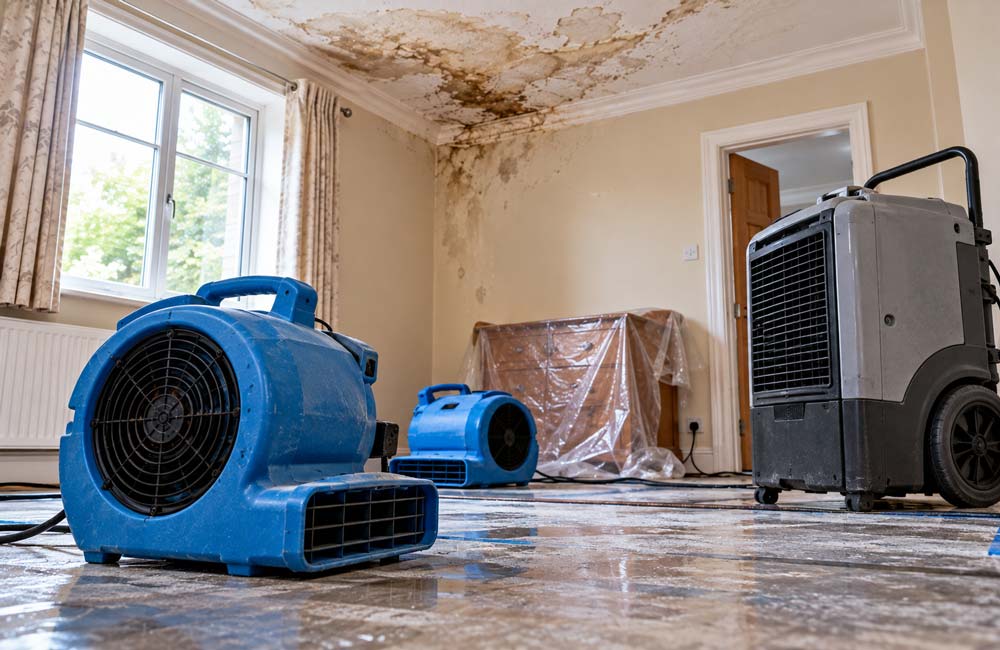
After stopping the leak, check whether insulation, drywall and other affected materials need drying or replacement. Water near electrical fixtures requires extra caution and qualified assistance.
FIX THE CAUSE
Will a small roof leak repair itself?
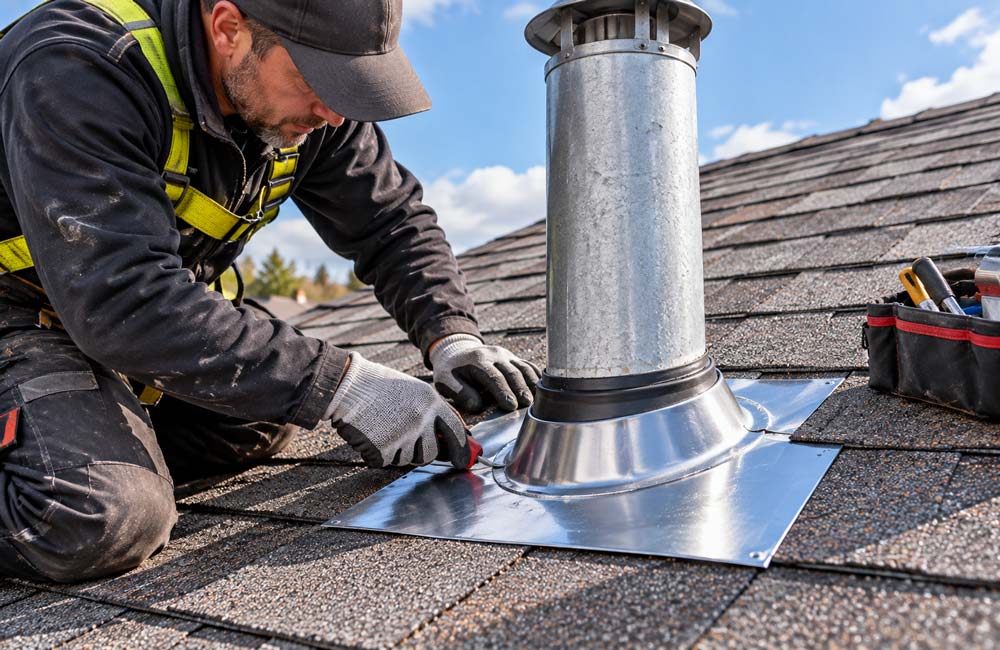
No. A dry spell can stop visible dripping without closing the opening. The next storm may restart the leak. Proper repairs depend on the cause: flashing, shingles, seals, underlayment or a larger roof defect. Keep roof access and repairs to suitably qualified professionals.
Coverage depends on the policy, cause and circumstances. Document the damage and contact your insurer promptly where a claim may be appropriate; do not assume long-term neglected maintenance is covered.
DON'T WAIT FOR THE NEXT STORM
How long can you leave a leaking roof?
There is no dependable number of days that makes a roof leak safe to ignore. A small opening may admit little water during light rain but much more during wind-driven rain. Water can also travel along rafters, sheathing or pipes before appearing as a ceiling stain.
Even when the dripping stops, insulation or wood hidden above the ceiling may remain damp. Arrange a roof inspection as soon as practical, and treat active dripping, a rapidly growing stain or a sagging ceiling as reasons for more urgent attention. Drying the visible surface alone does not establish that concealed materials are dry.
SMALL OPENING, BIGGER CONSEQUENCES
Can a small roof leak cause serious damage?
Yes, although it does not happen in every case. Repeated wetting can reduce insulation performance, stain or soften drywall and damage roof decking or other wood components. Mold may develop if moisture persists on suitable materials. Damage depends on the amount of water, the materials affected, ventilation and how quickly the leak is fixed.
A faint stain, bubbling paint or occasional drip.
Wet insulation, damp sheathing or water travelling along framing.
Stopping the water source and assessing the full wet area.
KNOW WHEN TO ACT URGENTLY
When is a roof leak an emergency?
A minor stain still needs investigation, but some situations call for immediate precautions rather than waiting for a routine appointment.
Bulging or sagging ceiling. Keep everyone out of the area; wet ceiling material may fail without warning.
Water near lights or wiring. Avoid contact with wet fixtures or electrical equipment. Seek qualified electrical help; only isolate power if it is safe to do so.
Heavy, ongoing water entry. Move people and belongings away from the affected area if safe and arrange urgent professional assistance.
Storm or structural damage. Stay away from damaged roof areas and do not attempt to climb onto the roof, especially during rain or high winds.
If there is immediate danger to people, leave the affected area and contact the appropriate emergency service. Do not puncture a swollen ceiling or enter an unsafe attic to investigate.
THE COST OF DELAY
How much can an ignored roof leak cost?
The price of a repair varies widely by roof type, access, location and the cause of the leak. More importantly, the eventual bill may include work beyond the roof itself. A localized flashing or shingle repair is a different job from repairing the roof and then replacing wet insulation, ceiling drywall, damaged finishes or deteriorated decking.
There is no trustworthy single figure for what an ignored leak will cost. The practical financial advantage of prompt investigation is the chance to stop water entering before additional materials need drying, treatment or replacement. Ask for a written assessment that separates the source repair from any interior restoration.
CHECK THE CAUSE AND YOUR POLICY
Will homeowners insurance cover a leaking roof?
Coverage depends on the policy wording, the cause of the damage and the circumstances. Sudden damage from a covered event may be treated differently from leaks caused by gradual wear, deterioration or a lack of maintenance. Some policies also distinguish between repairing the roof itself and repairing resulting interior damage.
Take photographs, keep a record of when you noticed the leak, take reasonable safe steps to limit further damage and contact your insurer promptly if you may need to claim. Keep receipts and avoid assuming that every roof leak—or every cost arising from it—is covered. Your insurer can explain the applicable conditions, excess and evidence requirements.
THE STAIN IS NOT ALWAYS THE SOURCE
How do you find where a roof leak is coming from?
Water can enter near damaged flashing, a roof valley, a vent penetration or a failed roof covering, then run along the underside of decking or framing before dripping into the room. This means the ceiling stain may be some distance from the actual opening.
From a safe indoor location, note where and when the leak appears, whether it happens only during wind-driven rain and whether there are multiple damp areas. Photograph visible signs for the roofer. Do not walk on a wet roof or enter an attic with unsafe flooring, exposed wiring or suspected structural damage. A qualified professional can trace the entry point and recommend a lasting repair.
AFTER THE REPAIR
How can you reduce the chance of another roof leak?
Confirm the cause was fixed. Ask what failed and what was repaired, rather than treating the ceiling stain alone.
Check hidden moisture. Have affected insulation, decking and drywall assessed and dried or replaced as appropriate.
Keep drainage clear. Maintain gutters and downspouts so roof runoff can leave the building as intended.
Inspect after severe weather. Look from the ground for obvious damage and arrange professional checks when needed.
Recheck the repaired area during subsequent rain, without entering unsafe spaces. If staining, damp smells or dripping return, contact the repairer promptly.
COMMON QUESTIONS
Questions about leaking roofs
How long can a roof leak go unrepaired?
There is no reliably safe waiting period. A small leak can worsen with the next rainfall, and hidden materials may already be wet. Arrange an inspection promptly.
Can a small roof leak cause major damage?
Yes, especially if water repeatedly enters and stays trapped. The severity depends on the leak, building materials and duration.
Does a ceiling stain mean the roof is still leaking?
Not necessarily; stains can remain after drying. But a stain should be investigated because the cause may not have been repaired.
Can I patch a roof leak from inside?
An interior patch rarely fixes the exterior entry point. Roof repair and safe access should be assessed by a qualified roofer.
Is a sagging ceiling dangerous?
It can be. Keep people away from a bulging or sagging area and arrange urgent professional help. Do not stand beneath it or puncture it.
SOURCES & CHECKS
U.S. guidance used for this page
BOTTOM LINE
A small leak is easier to address before the damage spreads.
Find and repair the roof defect, check hidden wet materials and dry the affected area. A stain or occasional drip should not be ignored simply because the rain has stopped.