

What happens when you put the wrong fuel in your car?
Petrol and diesel engines use different fuels because their fuel systems and combustion processes work differently. Putting the wrong fuel into the tank can therefore affect how the engine runs and, in some circumstances, damage components in the fuel system.
The most important distinction is whether the wrong fuel is still sitting mainly in the tank or has already been circulated through the vehicle.
If you notice the mistake before starting the engine, dealing with it is generally much simpler. Starting or driving the car can distribute the incorrect fuel through pumps, fuel lines and the engine.
What happened?
Choose the fuel mistake first, then tell us whether the engine was started.
1. Which fuel went into the car?
2. Was the engine started?
Select both options above
Your guidance will appear here once you choose the fuel mistake and whether the engine was started.
If you have just noticed the mistake, avoid starting the vehicle while you check what to do next.
This guide provides general information rather than a diagnosis for a particular vehicle. Follow your vehicle manufacturer's guidance and seek professional assistance if you are unsure.
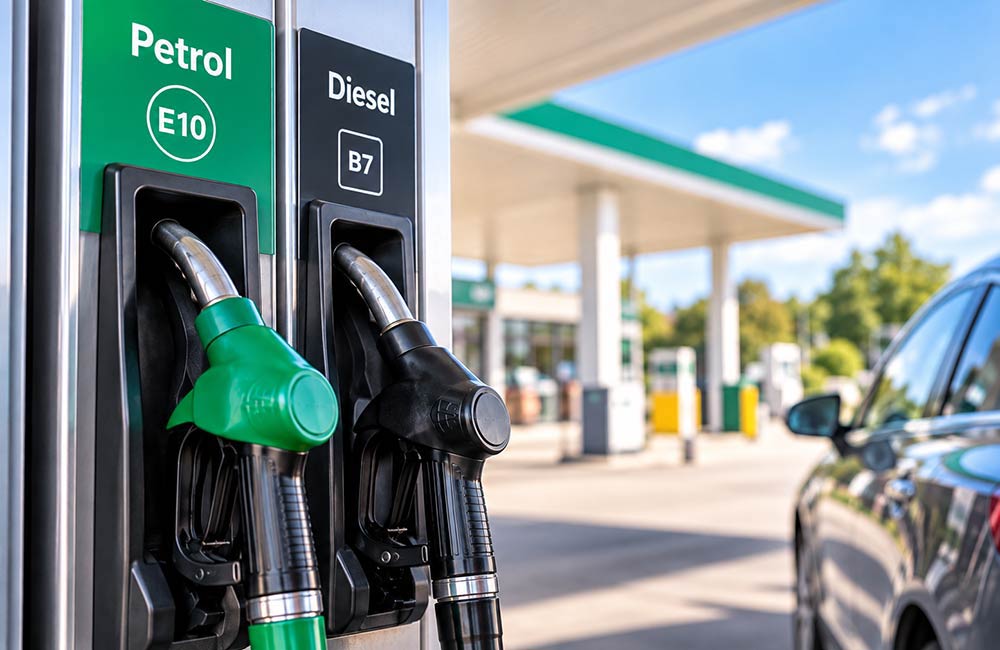 Petrol and diesel fuel pump image
What happens if you put petrol in a diesel car?
Petrol in a diesel vehicle can be particularly problematic because diesel fuel does more than provide energy. It also helps lubricate components in many diesel fuel systems.
Petrol has different lubricating properties. If the engine is started, the mixture can begin circulating through the fuel system and may increase wear or damage sensitive components.
The amount of incorrect fuel, the vehicle design and whether the engine has been run can all influence the outcome.
What happens if you put diesel in a petrol car?
Diesel in a petrol engine can interfere with the way the engine burns its fuel. If enough diesel reaches the engine, it may run poorly, misfire, produce smoke, lose power or stop running.
Although the consequences can differ from putting petrol into a diesel vehicle, the sensible response is the same: once the mistake is recognised, avoid running the engine unnecessarily.
 Wrong fuel dashboard image
What if you haven't started the engine?
This is generally the better situation. If the engine has not been started, much of the incorrect fuel may still be confined to the fuel tank.
Do not start the vehicle simply to move it away from the pump unless a qualified professional tells you it is safe to do so. Tell filling-station staff what has happened and arrange appropriate assistance.
Keep the engine switched off. A specialist may be able to drain and clean the fuel system before the incorrect fuel is circulated through the vehicle.
What if you already started the engine?
Starting the engine can move the incorrect fuel beyond the tank and into other parts of the fuel system.
If you have already started or driven the car and then realise the mistake, stop somewhere safe as soon as reasonably possible and switch the engine off.
Do not repeatedly restart the vehicle to see whether the problem has gone away. Further running can continue to circulate the fuel mixture.
What should you do after putting in the wrong fuel?
Don't start the engine
If you have noticed the mistake at the pump, leave the engine switched off.
Tell the filling station
If you are still at the pump, let staff know what has happened so the situation can be handled safely.
Arrange assistance
Contact your breakdown provider, recovery service or an appropriate wrong-fuel specialist.
Explain exactly what happened
Tell them which fuel was added, approximately how much went in and whether the engine was started or the vehicle was driven.
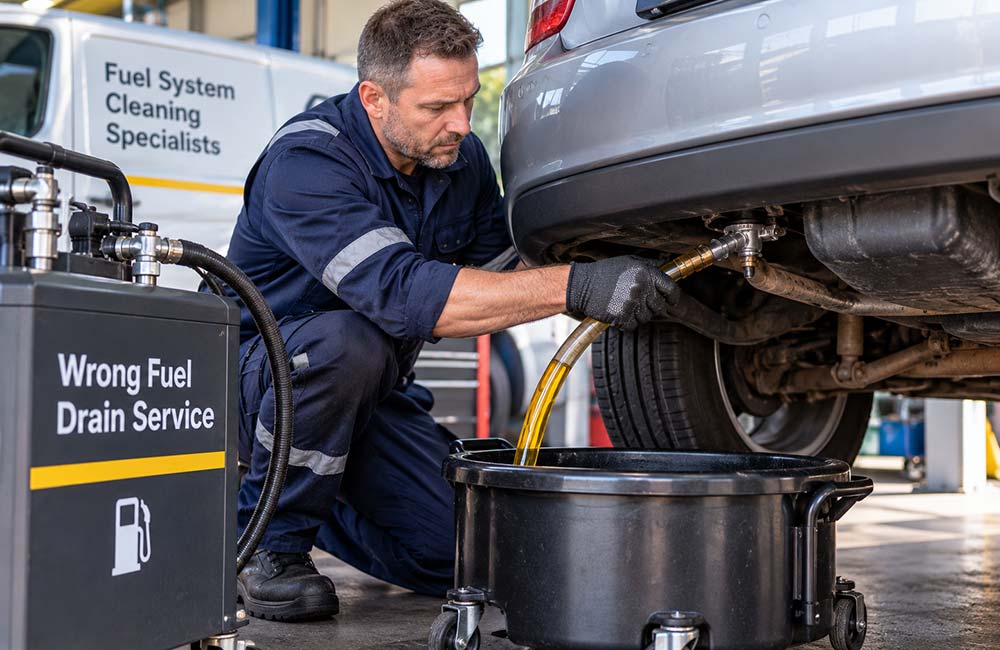 Wrong fuel draining image
Can you drive after putting in the wrong fuel?
If you know the wrong fuel has been added, driving the vehicle to find out whether it still works is not a useful test. It can circulate the mixture further through the fuel system.
If you have already driven away before noticing the mistake, find a safe place to stop and switch the engine off rather than deliberately continuing the journey.
What if you only put in a small amount of the wrong fuel?
There is no single amount that can be treated as harmless for every vehicle. Fuel-system designs differ, as do tank sizes, fuel specifications and manufacturer requirements.
Do not assume that adding more of the correct fuel will automatically solve the problem. If you know the wrong fuel has been added, get advice appropriate to your particular vehicle.
Can the wrong fuel damage the engine?
It can. The level and type of damage depend on the fuel mistake, the vehicle and how far the incorrect fuel has travelled through the system.
A vehicle that was never started may require little more than the appropriate draining and cleaning procedure. A vehicle driven on the wrong fuel can potentially require more extensive work.
That is why recognising the mistake before turning the key or pressing the start button is so important.
How can you avoid putting in the wrong fuel?
Pause for a moment and confirm the fuel grade before you begin filling.
This is particularly useful when driving a hire car, borrowed vehicle or a recently purchased car.
Many vehicles display the required fuel type inside the fuel flap or close to the filler.
Mistakes are easier when changing regularly between petrol and diesel vehicles.
When should you get professional help?
If you know or suspect that the wrong fuel has gone into the vehicle, professional advice is sensible before you continue driving.
Make it clear whether the engine has been started and whether the car has been driven. Those details can help the recovery service or technician understand what may need to be done.
The most important thing is not to start the engine
Putting the wrong fuel in your car is a mistake that can often be dealt with, particularly when it is spotted before the engine is started.
Once the wrong fuel is circulated through the vehicle, the situation can become more complicated. If you realise what has happened, stop, leave the engine off and arrange appropriate assistance rather than trying to drive through the problem.