

What happens when your car battery dies?
Your car relies on its 12-volt battery to provide the initial electrical power needed to start the engine. When the battery no longer has enough charge, the starter motor may turn slowly, click without turning the engine, or do nothing at all.
Electrical equipment can also behave strangely. Interior lights may be dim, dashboard displays may flicker and central locking or other electrical systems may stop working normally.
Once a conventional petrol or diesel engine is running, the alternator normally supplies electrical power and recharges the battery. That means a flat battery and a faulty charging system can sometimes produce similar symptoms.
What is your car doing?
Choose the symptom that most closely matches what happens when you try to start the car.
Start with what you can hear and see
The way the car behaves when you try to start it can provide useful clues about whether low battery power is a likely cause.
Choose one of the options above to see the appropriate next checks.
This guide is for general information only. Similar symptoms can have different causes, so it cannot diagnose a vehicle fault.
Signs your battery may be flat
A car that will not start does not automatically have a dead battery, but there are several common clues.
You turn the key or press the start button and hear repeated clicking without the engine starting.
The engine turns over much more slowly than normal and struggles to start.
Dashboard, interior or exterior lights appear unusually weak when you try to start the car.
In a severely discharged battery, you may get little or no electrical response from the vehicle.
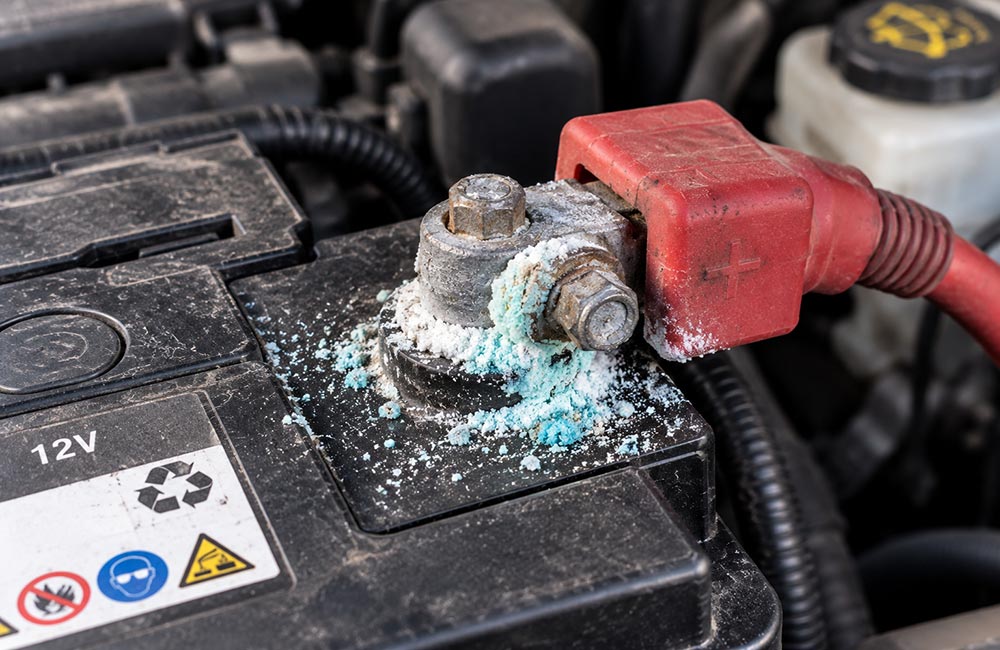 Car battery terminal image
Why did the battery die?
A flat battery does not necessarily mean the battery itself has suddenly failed. The battery may simply have been discharged.
Something was left switched on
Headlights, interior lights or other electrical equipment can drain the battery while the engine is off. Modern vehicles often shut some systems down automatically, but a significant electrical drain can still leave the battery too weak to start the car.
The battery is getting old
Car batteries gradually lose their ability to store and deliver electrical energy. Temperature, driving patterns, battery type and vehicle use all affect how long a particular battery lasts.
The car has been standing
A vehicle still uses a small amount of electricity when parked. If it remains unused for a long period, particularly with an already weakened battery, the remaining charge can fall too low to start the engine.
Lots of short journeys
Starting the engine takes a significant burst of energy. Repeated short trips may not always give the charging system enough opportunity to replace what was used, especially in cold weather or when many electrical systems are operating.
Charging-system trouble
If the alternator or another part of the charging system is not working correctly, the battery may not recharge properly while you drive. In that situation, fitting or charging a battery may not solve the underlying problem.
What should you do if the battery is dead?
Start by checking the obvious things before deciding what to do next.
Switch everything off
Turn off the lights, heater, audio system and other electrical equipment before trying to start the car again.
Check for an obvious cause
Look for lights that may have been left on and, if it is safe and accessible, check whether the battery connections appear loose or heavily corroded.
Consider a jump-start
If the vehicle manufacturer permits it and you have the correct equipment, a jump-start may provide enough power to start the engine.
Investigate repeated failures
If the battery soon goes flat again, have the battery and charging system tested rather than repeatedly jump-starting the vehicle.
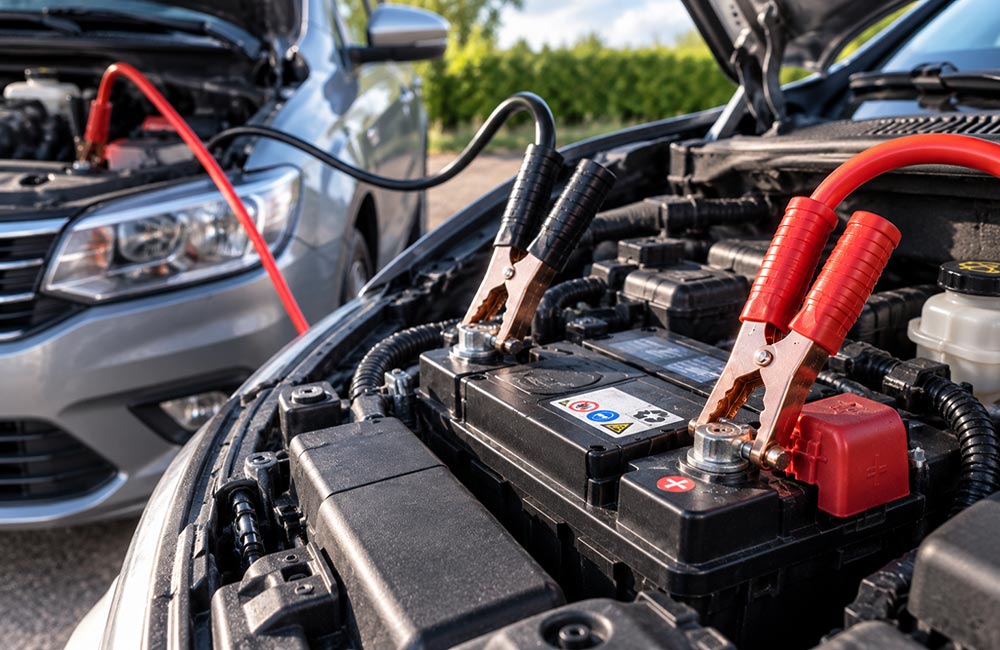 Jump-start image
Can you jump-start a dead car battery?
Often, yes. A suitable donor vehicle or portable jump starter can provide enough electrical power to start a vehicle with a discharged 12-volt battery.
However, jump-starting is not identical on every vehicle. Some cars have dedicated jump-start terminals, batteries mounted away from the engine bay, or manufacturer procedures that need to be followed.
Check the owner's manual before connecting jump leads or a booster pack. Do not attempt to jump-start a battery that appears physically damaged, swollen, leaking or frozen.
Before using jump leads
- Check the owner's manual for the correct procedure and connection points.
- Make sure the vehicles or equipment use compatible electrical systems.
- Keep cables clear of belts, fans and other moving engine components.
- Never allow the jump-lead clamps to touch each other while connected to a power source.
- If you are unsure about the procedure, use roadside assistance or another qualified service.
What happens after you jump-start the car?
If the engine starts, the charging system should begin supplying electrical power. That does not necessarily mean the battery problem has been fixed.
A battery that was simply discharged may recover after being properly recharged. A weak or damaged battery may fail again, and a faulty charging system may leave even a good battery discharged.
Follow the manufacturer's guidance about recharging the battery. If the car displays a charging-system warning, repeatedly loses electrical power or will not restart, it should be checked rather than relying on repeated jump-starts.
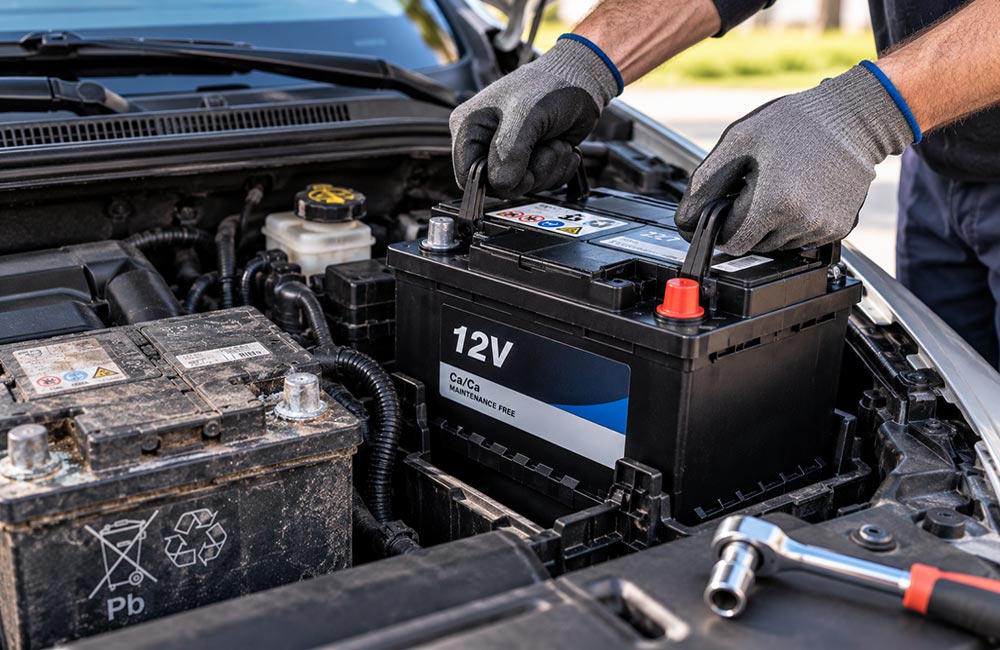 Battery replacement image
Does a dead battery always need replacing?
No. A healthy battery can go flat because something drained it while the engine was switched off. Once properly recharged, it may continue working normally.
Replacement becomes more likely when the battery repeatedly struggles to start the vehicle, cannot hold its charge, fails a battery test or has reached the end of its useful service life.
The replacement battery also needs to be suitable for the vehicle. Battery size, capacity, terminal layout and technology can matter, particularly on vehicles with stop-start systems or battery-management electronics.
How can you reduce the chance of a flat battery?
A noticeable change in cranking speed can be an early sign that the battery deserves attention.
Make sure headlights and other manually controlled electrical equipment have been switched off.
Repeated discharge can indicate a weak battery, an electrical drain or a charging-system fault.
If a vehicle will remain unused, check the manufacturer's advice about maintaining the 12-volt battery.
When should you get help?
A single flat battery after accidentally leaving the lights on may have an obvious explanation. Other situations deserve more investigation.
Consider professional assistance if the battery repeatedly goes flat, the car loses electrical power while driving, a battery or charging warning remains illuminated, the battery is visibly damaged, or you are not confident about safely jump-starting the vehicle.
A dead battery may be simple — or a warning of another problem
If your car battery dies, the immediate result is usually a car that will not start. A jump-start may get you moving again, but it does not explain why the battery went flat.
If there is an obvious one-off cause, the battery may simply need recharging. If the problem returns, have the battery and charging system checked so that the underlying cause can be identified.