

What happens when your car overheats?
Your engine produces a large amount of heat while it runs. The cooling system carries excess heat away from the engine and releases it through the radiator.
If that system can no longer control the temperature, the engine becomes hotter than its intended operating range. The temperature gauge may climb, a warning light may appear or steam may become visible from beneath the bonnet.
The longer excessive heat continues, the greater the possibility of damage. What begins as a coolant leak, failed thermostat or cooling fan problem can eventually affect major engine components.
What are you seeing?
Choose the situation that most closely matches what your car is doing.
Watch what the car is telling you
Temperature changes, dashboard warnings and visible steam can indicate different stages of an overheating problem.
Choose one of the situations above for general guidance.
This guide cannot diagnose a mechanical fault. Vehicle warning systems differ, so always follow the owner's manual and seek professional assistance when necessary.
Warning signs that your car is overheating
Overheating does not always begin with clouds of steam. Watch for changes in the temperature gauge and dashboard warnings as well.
The temperature gauge moves significantly above its normal position or towards the hot or red area.
A coolant-temperature warning light or overheating message appears on the dashboard.
Steam or vapour appears from beneath the bonnet as the cooling system becomes excessively hot.
Coolant may be visible beneath the vehicle or around components in the cooling system.
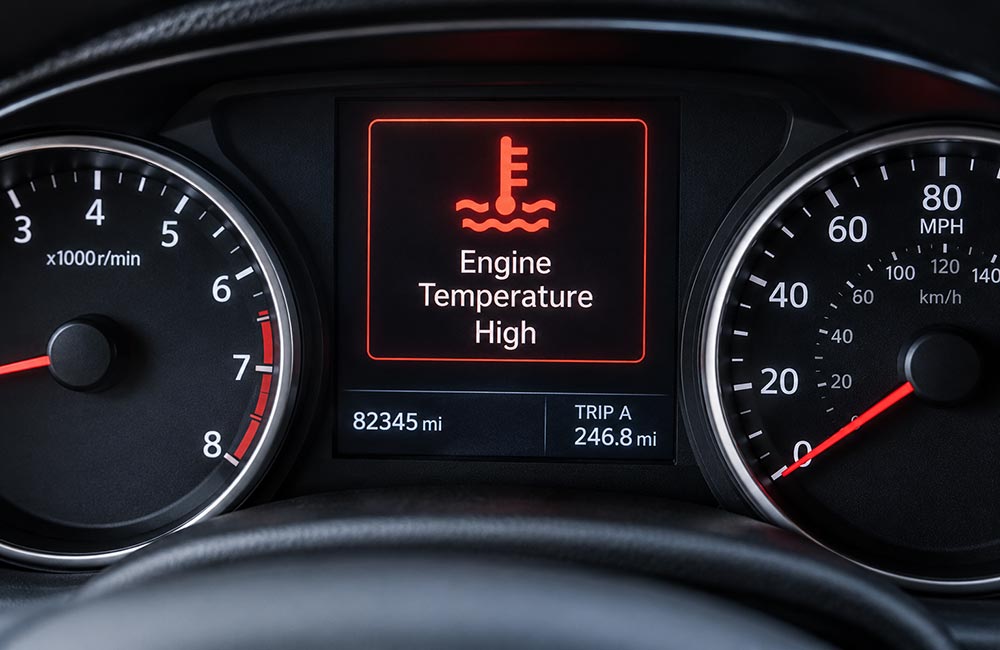 Engine temperature warning image
Why does a car overheat?
Overheating can have several causes. Some are relatively straightforward, while others can indicate a more substantial cooling-system or engine problem.
Low coolant or a coolant leak
If there is not enough coolant circulating through the system, it may no longer be able to carry sufficient heat away from the engine.
Thermostat problem
The thermostat helps regulate coolant flow. If it fails to operate correctly, coolant circulation and temperature control can be affected.
Cooling fan problem
The cooling fan helps move air through the radiator, particularly when the vehicle is stationary or travelling slowly. A fan fault can allow temperatures to rise.
Water pump problem
The coolant pump circulates coolant around the engine and radiator. A pump problem can reduce or stop that circulation.
Radiator or cooling-system problem
A damaged, leaking or obstructed radiator, hose or other cooling-system component can prevent heat from being controlled effectively.
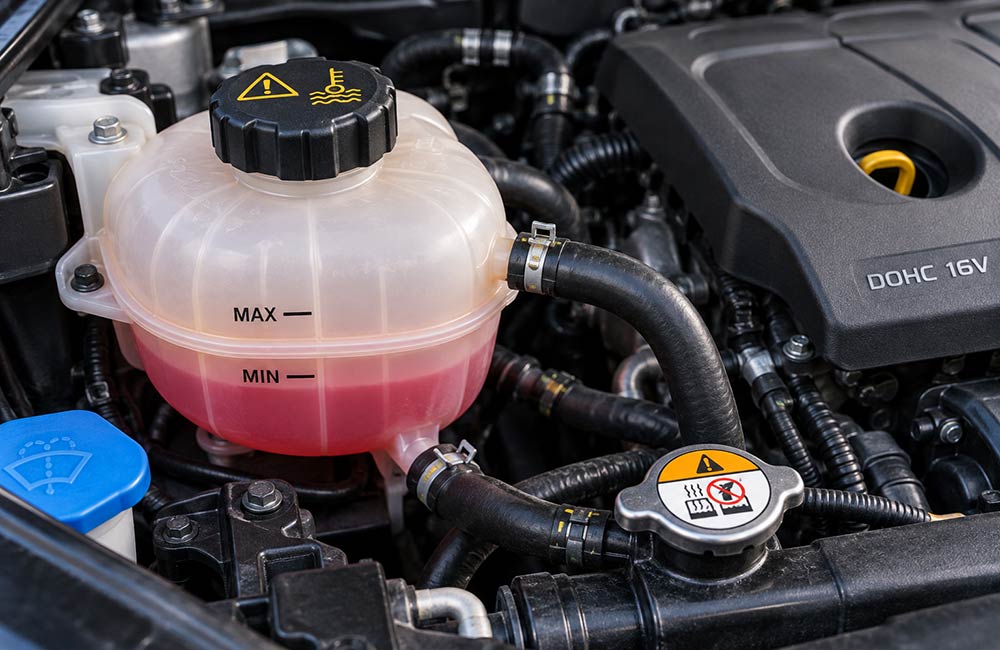 Car cooling system image
What should you do if your car overheats?
Treat a genuine overheating warning as something that needs prompt attention rather than trying to complete the journey.
Find somewhere safe to stop
Reduce your speed safely and pull over somewhere that does not put you or other road users at unnecessary risk.
Switch off the engine
Once safely stopped, switch off the engine so it is no longer generating additional heat.
Allow it to cool
Give the engine and cooling system time to cool before attempting any inspection.
Check before continuing
Once completely cool, check for obvious coolant loss or leaks and follow the vehicle manufacturer's instructions.
What happens if you keep driving an overheating car?
Continuing to drive while the engine is overheating keeps exposing engine components to excessive temperature. The original problem may therefore become considerably more serious.
Severe or prolonged overheating can contribute to cylinder-head or head-gasket problems, distortion of engine components and ultimately major engine failure.
There is no useful universal answer to how many miles an overheating car can safely travel. The safer response to a genuine overheating warning is to stop rather than gamble on how long the engine will continue running.
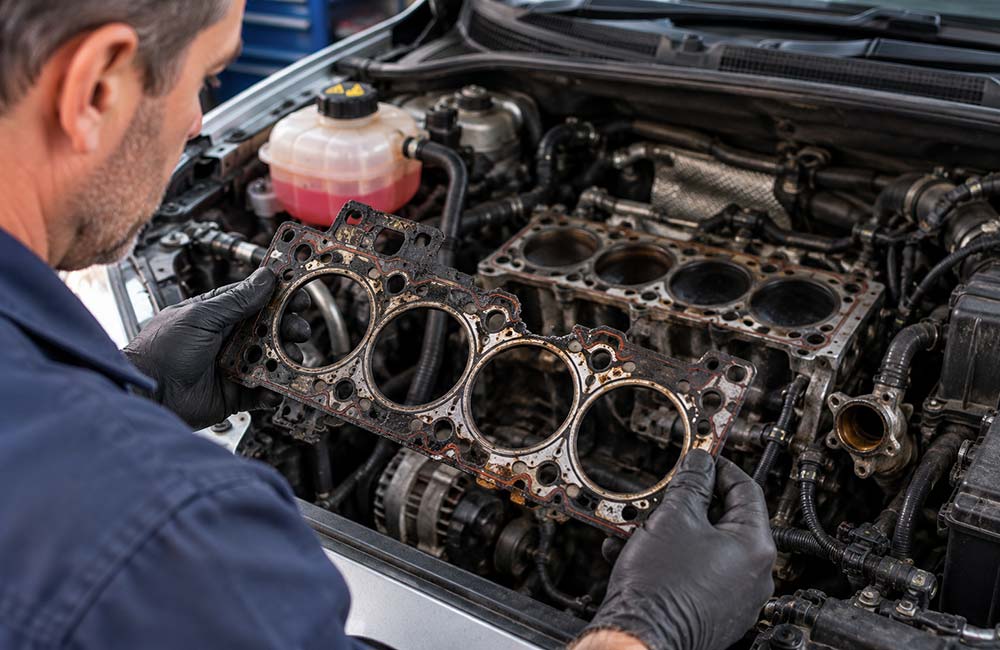 Overheated engine inspection image
Can you add coolant after the car overheats?
Once the engine has cooled sufficiently, a low coolant level may provide an important clue about why the engine overheated.
Use the coolant specification recommended for your vehicle and follow the owner's manual. Different vehicles can require different coolant types and procedures.
If the coolant level keeps falling, simply topping it up is not a permanent solution. Repeated coolant loss can indicate a leak or another fault that needs to be investigated.
Can you drive again after the engine cools down?
Cooling down does not repair whatever caused the engine to overheat. It only reduces the temperature.
If there is an obvious coolant leak, the warning returns, the temperature starts climbing again or you are unsure why the vehicle overheated, continuing the journey risks further damage.
In those circumstances, recovery or professional inspection is the safer option.
How can you reduce the risk of overheating?
Check the coolant when the engine is cold and follow the maintenance instructions for your vehicle.
Unexplained coolant loss or fluid beneath the vehicle deserves investigation.
Become familiar with its normal position so an unusual rise is easier to recognise.
If the problem returns, have the cooling system inspected rather than repeatedly topping up coolant.
When should you get professional help?
Arrange professional inspection if the car repeatedly overheats, coolant keeps disappearing, there is an obvious leak, the cooling fan does not appear to work, or the temperature rises again after the engine has cooled.
You should also seek assistance if the engine runs poorly after an overheating event, warning lights remain illuminated or you are uncertain whether the vehicle is safe to drive.
An overheating engine is a warning to stop, not something to drive through
If your car genuinely overheats, safely stop and switch off the engine. Giving it time to cool can prevent the immediate temperature from becoming worse, but it does not fix the underlying problem.
Check the cooling system only when it is safe to do so, follow the manufacturer's instructions and have recurring overheating investigated before it causes more serious engine damage.