

What happens when the engine warning light comes on?
Modern cars continually monitor many parts of the engine, emissions and electronic control systems. When the car detects a problem, it can store a diagnostic trouble code and illuminate a warning light on the dashboard.
This is commonly called the check engine light in the US. You may also hear it called the engine management light or malfunction indicator light.
The warning light itself does not tell you exactly which component has failed. It tells you that the vehicle has detected something outside its expected operating conditions.
What is your engine warning light doing?
Choose the situation that most closely matches what you are seeing.
Check what the car is telling you
The urgency of an engine warning can depend on whether the light is steady or flashing and on any other symptoms the vehicle is showing.
Choose one of the situations above for general guidance.
Dashboard warnings and manufacturer instructions differ between vehicles. This guide cannot diagnose the fault, so check your owner's manual and have the vehicle professionally assessed when necessary.
What is the difference between a steady and flashing engine warning light?
The way the warning light behaves can provide useful information, although the exact meaning should always be checked against the owner's manual for your car.
A light that remains continuously illuminated usually means the vehicle has detected and stored a fault. The car may still appear to drive normally, but the cause should be investigated rather than ignored.
A flashing warning can indicate a more urgent problem. Reduce the demand on the engine and follow the vehicle manufacturer's instructions. If the car is running badly or the warning continues, stop safely and arrange assistance.
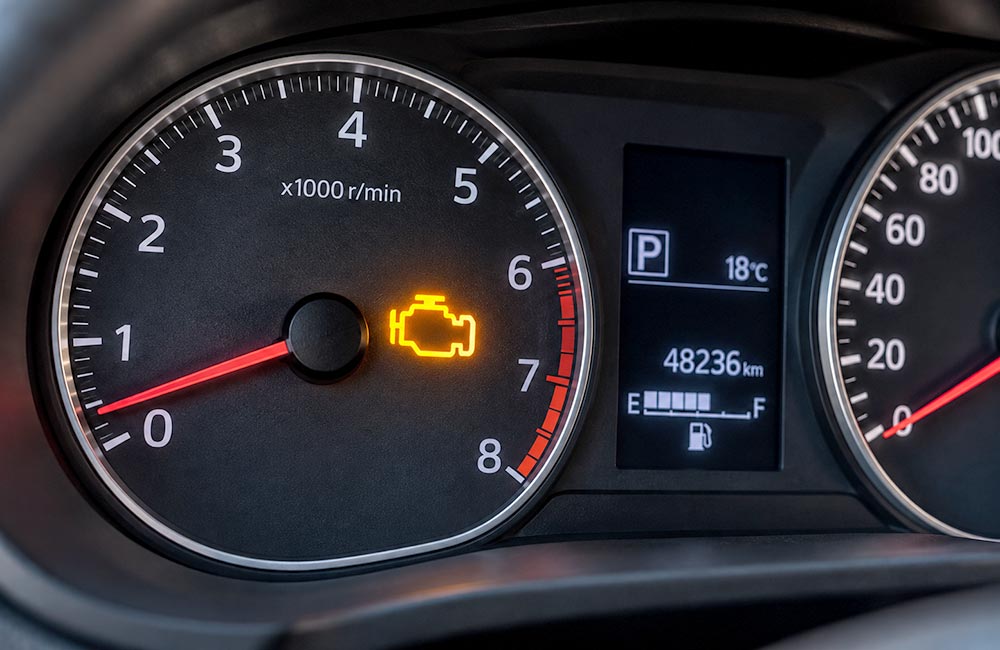 Engine warning light dashboard image
Why does the engine warning light come on?
There is no single cause. The warning can be triggered by problems involving the engine, fuel system, ignition, emissions controls, sensors or other electronically monitored components.
A sensor may report an unexpected reading or fail to provide the information the engine control system expects.
Problems involving ignition components or combustion can cause the engine to misfire and trigger a warning.
Incorrect fuel delivery or an issue affecting the air entering the engine can alter how the engine runs.
The vehicle may detect that part of its emissions-control system is not operating as expected.
Because many different faults can illuminate the same dashboard symbol, the light alone cannot identify which component needs attention.
Can you keep driving with the engine warning light on?
It depends on the warning, the vehicle and what the car is doing. A steady warning with a car that appears to run normally is different from a flashing warning accompanied by severe shaking, loss of power, smoke or unusual noises.
If the light is steady and there are no serious symptoms, check the owner's manual and arrange for the fault to be diagnosed. Avoid treating the warning as something that can simply be ignored indefinitely.
Why can the car lose power when the warning light comes on?
Some vehicles can limit performance when the control system detects certain faults. This is often referred to as limp mode or reduced-power mode.
The car may restrict engine speed, throttle response or available power. The purpose is generally to protect components or allow limited operation while a problem is present.
Reduced-power behaviour is not a repair. The underlying fault still needs to be diagnosed.
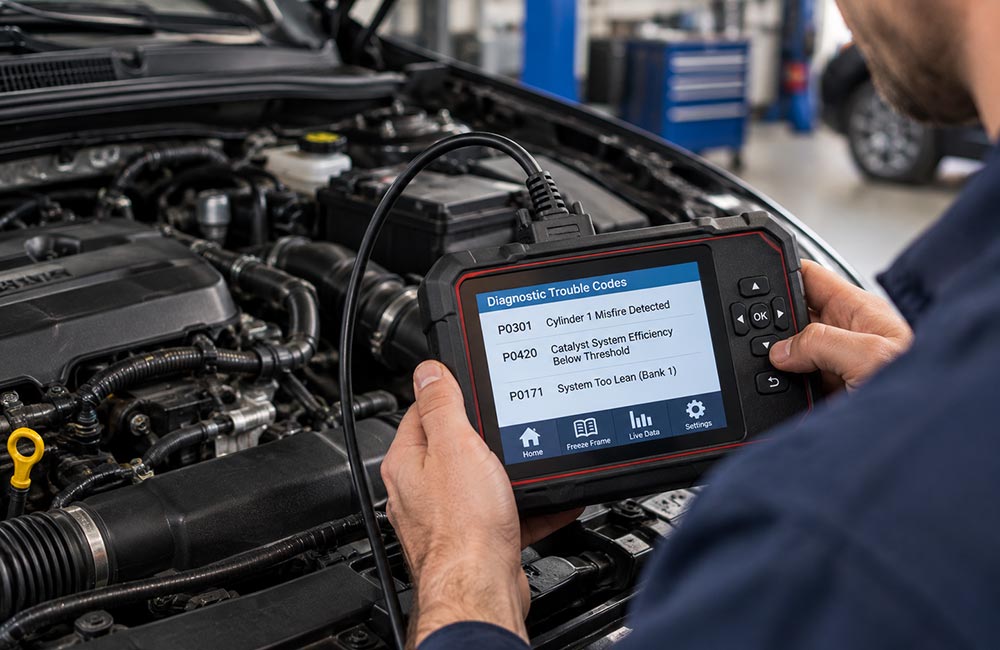 Engine diagnostic scan image
How is an engine warning light diagnosed?
When the vehicle detects a monitored fault, it may store one or more diagnostic trouble codes. A diagnostic scan tool can retrieve those codes from the vehicle.
A fault code is useful evidence, but it does not necessarily prove that the component named in the code is itself defective. Wiring, connections, related components or operating conditions can sometimes produce similar results.
Proper diagnosis can therefore involve reading the codes, checking live vehicle data and testing the relevant system before replacing parts.
What should you do when the engine warning light comes on?
Look at the warning
Check whether the light is steady or flashing and whether any other warning lights or messages have appeared.
Pay attention to the car
Notice whether the engine is running normally or whether there is shaking, reduced power, smoke, overheating or unusual noise.
Check the owner's manual
The manufacturer can provide specific instructions for the warning symbol and how urgently it should be treated.
Have the fault diagnosed
If the warning remains illuminated, arrange diagnostic testing rather than repeatedly clearing or ignoring it.
What if the engine warning light goes off by itself?
Some faults are intermittent. If the condition that triggered the warning is no longer detected, the light may eventually go out.
That does not necessarily mean nothing happened. Diagnostic information may remain stored in the vehicle and can sometimes help identify an intermittent problem.
If the light repeatedly comes on and goes off, or the car shows other symptoms, the underlying cause should still be investigated.
Should you just reset the engine warning light?
Clearing the warning does not repair the fault that caused it. If the underlying problem remains, the vehicle may detect it again and illuminate the light once more.
Diagnostic codes can also provide useful information when investigating a fault. Clearing them before the problem has been examined can remove information that may help with diagnosis.
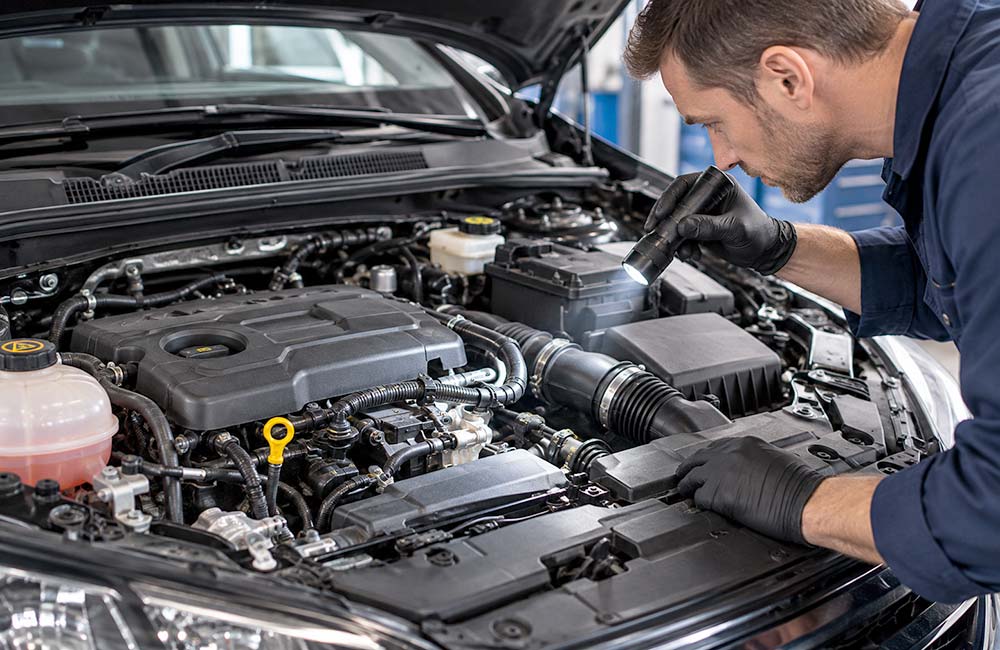 Engine inspection image
What happens if you ignore the engine warning light?
The outcome depends entirely on the fault that caused the warning. Some problems may initially have little noticeable effect, while others can become more serious if the vehicle continues to be driven.
A developing problem can become more expensive or difficult to repair if it is allowed to continue.
The engine may eventually develop poor running, reduced power or other symptoms.
Depending on the fault, continued operation can place additional stress on related systems or components.
Driving indefinitely with the light already illuminated makes it harder to notice when another monitored problem develops.
When should you get professional help?
Arrange diagnosis if the warning remains on, keeps returning or is accompanied by a noticeable change in the way the car runs.
More urgent assistance is appropriate when the warning flashes or the vehicle develops severe shaking, major loss of power, overheating, smoke, unusual mechanical noises or another serious warning.
If you are uncertain about what your particular dashboard warning means, follow the instructions in the vehicle owner's manual rather than assuming that every engine warning light behaves in the same way.
The engine warning light is a warning to investigate, not a diagnosis
A steady check engine light can appear while the car still seems to drive normally, but that does not mean it should be ignored. The vehicle has detected something that needs investigation.
A flashing warning or a light accompanied by serious running problems deserves more urgent attention. Check the owner's manual, pay attention to how the vehicle is behaving and have the stored fault information properly diagnosed.