

What happens when your tires wear out?
A tire relies on its tread pattern and rubber surface to maintain contact with the road. As the tread wears down, the tire gradually loses some of its ability to deal with water and changing road conditions.
On a dry road, a worn tire may not immediately feel dramatically different during ordinary driving. The problem becomes more noticeable when you need extra grip — for example during heavy braking, cornering or driving in rain.
Tires — spelled tyres in the UK and some other countries — do not always wear evenly. One shoulder may wear faster than the other, the center can wear differently from the edges, or one tire may deteriorate faster than the others.
What are you seeing on your tires?
Choose the option that most closely matches what you have noticed.
Check what your tires are telling you
Tread wear, uneven wear and visible damage can point to different tire or vehicle problems.
Choose one of the conditions above for general guidance.
This guide cannot determine whether a tire is safe from a description alone. Inspect the tire properly and seek professional advice if you are uncertain about its condition.
Signs your tires may be worn out
Tire wear is often visible before it becomes obvious from behind the wheel. A quick inspection can reveal several signs that deserve attention.
The tread grooves have become shallow or the tread surface is approaching the wear indicators built into the tire.
One edge, the center or individual areas of the tire are wearing noticeably faster than the rest.
Cracking, cuts, bulges or other visible damage can indicate a problem beyond normal tread wear.
New vibration, pulling or changes in road feel can justify checking the tires, wheels and related components.
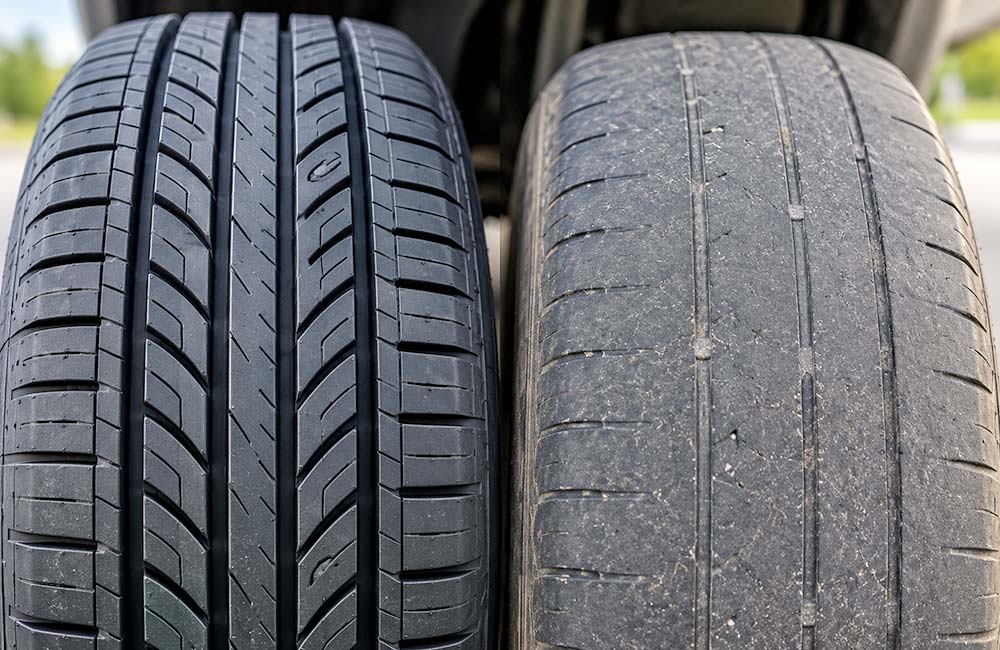 Worn tire tread image
Why does tire tread matter?
The tread pattern is designed to help the tire work across a range of road conditions. On wet roads, its grooves provide routes through which water can move as the tire rolls across the surface.
As those grooves become shallower, there is less space available to move water away. That can reduce the tire's ability to maintain effective contact with the road when there is standing water.
Wet-weather grip
Rain is one of the situations in which worn tires can become particularly noticeable. Reduced tread depth can mean less ability to deal with water between the tire and road.
Braking
Tire condition affects the grip available when you brake. Worn tires can reduce the margin available during an emergency stop, especially when the road surface is wet or slippery.
Cornering and steering
Tires also provide the grip needed to change direction. As their condition deteriorates, the car may have less grip available when cornering or making an abrupt steering maneuver.
What happens to worn tires in the rain?
Wet roads make tread condition particularly important. Water has to escape from beneath the tire so that the rubber can maintain contact with the road surface.
As tread depth decreases, the tire has less capacity to channel that water away. At sufficient speed and with enough water on the road, the tire can begin to ride on a layer of water rather than maintaining normal contact with the road.
This is commonly called hydroplaning, or aquaplaning. When it happens, steering and braking response can be substantially reduced until the tire regains effective contact with the road.
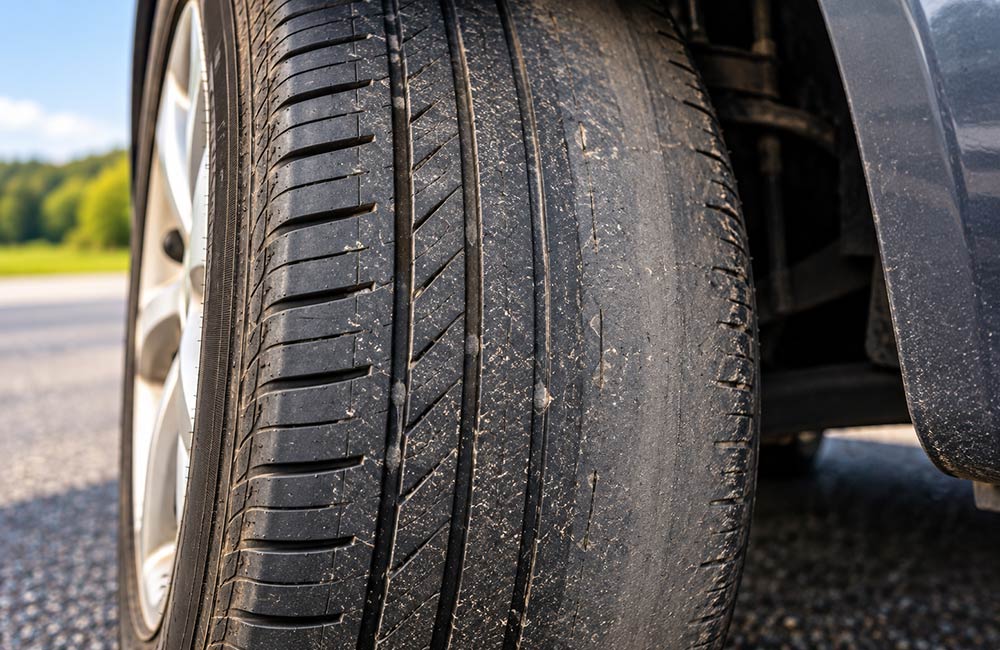 Uneven tire wear image
What causes uneven tire wear?
Tires do not always wear uniformly across the tread. The pattern of wear can sometimes provide useful clues about what is happening.
Incorrect tire pressure
Running a tire at an unsuitable pressure can change how its tread contacts the road and contribute to uneven wear. Use the pressure specified for your vehicle rather than relying on the maximum pressure printed on the tire itself.
Wheel alignment
Incorrect wheel alignment can cause part of a tire to scrub against the road more heavily than the rest of the tread. This can make one edge wear much more quickly.
If your tires repeatedly develop uneven wear, replacing the tires without investigating the cause may allow the same pattern to develop again.
Suspension or steering problems
Worn or damaged suspension and steering components can also affect how a tire meets the road. Unusual wear combined with pulling, vibration or poor handling deserves further investigation.
What happens if you keep driving on worn tires?
Continuing to use worn tires means continuing to reduce the amount of usable tread available. The consequences may be most apparent when conditions suddenly demand more grip than normal.
Shallow tread can make it harder for the tire to deal with water on the road.
Worn tires can leave less grip available when you need to stop quickly.
Reduced grip can affect how confidently the vehicle responds during cornering or sudden maneuvers.
Severe wear or physical damage can leave a tire less able to cope with demanding road conditions.
How should you check your tire tread?
Look across the full width of the tread rather than checking only one spot. A tire can have reasonable tread in one area while being considerably more worn elsewhere.
Most modern tires include tread-wear indicators molded into the main grooves. As the tread wears closer to these indicators, it becomes increasingly important to measure the remaining tread accurately.
Tread-depth requirements vary by location, so use the legal requirement that applies where the vehicle is being driven. If you are unsure how to measure the tread or interpret the wear pattern, a tire professional can check it.
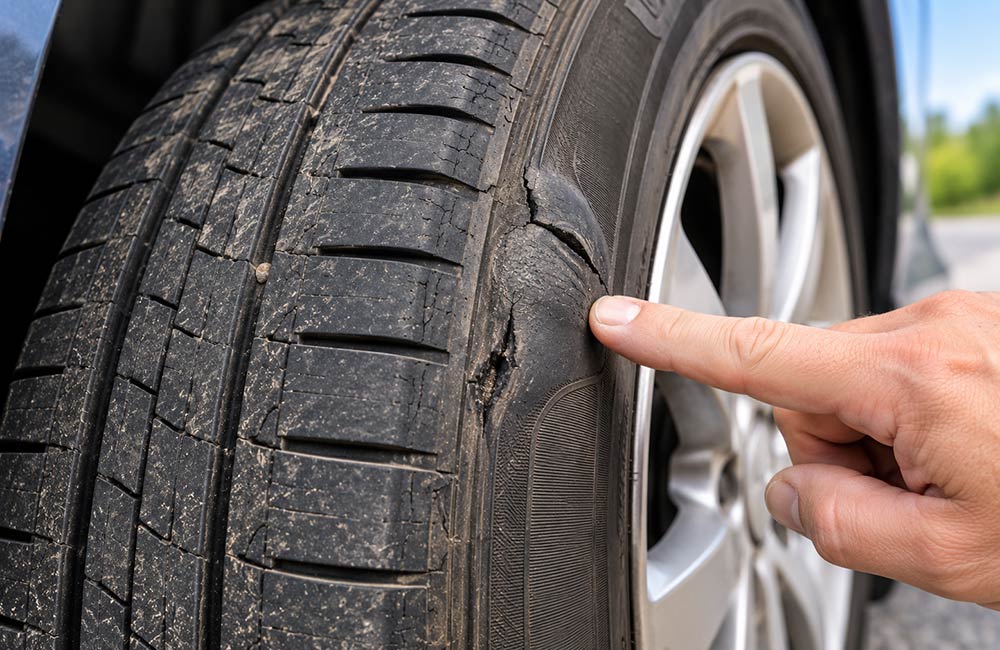 Tire condition inspection image
What if the tread looks fine but the tire is damaged?
Tread depth is only one part of tire condition. A tire can still have usable tread while developing damage elsewhere.
Look for cuts, cracking, unusual deformation, exposed material or a bulge in the sidewall. A visible bulge or serious structural damage should not be treated as ordinary tread wear.
When should worn tires be replaced?
A tire should not simply be used until the tread appears completely smooth. Replacement may be necessary because of tread wear, damage, deterioration or another condition that makes the tire unsuitable for continued use.
Legal tread-depth requirements differ between countries and regions, so check the rules that apply where you drive. The vehicle and tire manufacturers may also provide inspection and replacement guidance.
If you cannot confidently determine whether a tire is still serviceable, have it inspected rather than trying to estimate its condition visually.
How can you reduce uneven or premature tire wear?
Check them regularly and use the pressures specified for your vehicle.
Look across the complete tread surface so uneven wear is easier to spot early.
Pulling or repeated wear on one side of a tire can justify having the alignment and related components checked.
Cuts, cracking, bulges and unusual vibration deserve attention even if tread depth still appears reasonable.
When should you get professional help?
Have a tire inspected if you find significant uneven wear, cracking, cuts, a bulge or other visible damage, or if you cannot confidently determine how much usable tread remains.
Professional inspection is also sensible if the car develops unexplained vibration, repeatedly pulls to one side or continues wearing tires unevenly after pressures have been corrected.
Worn tires reduce the margin between normal driving and losing grip
Tire wear happens gradually, which makes it easy to overlook. But as tread disappears, the tire has less ability to cope with water and demanding driving conditions.
Check all four tires regularly, investigate uneven wear and don't rely on tread depth alone if a tire shows signs of physical damage. Replacing a worn or damaged tire before it becomes a serious problem is far better than discovering its limitations during an emergency stop or on a wet road.