

EXPLORE THE WHAT-IF
What would happen after humans disappeared?
There is no single timetable for an empty Earth. A dry desert city, a coastal town and a northern industrial city would decay differently. This interactive shows a simplified sequence of likely changes rather than exact predictions.
Choose a setting
See how the broad pattern changes by environment.
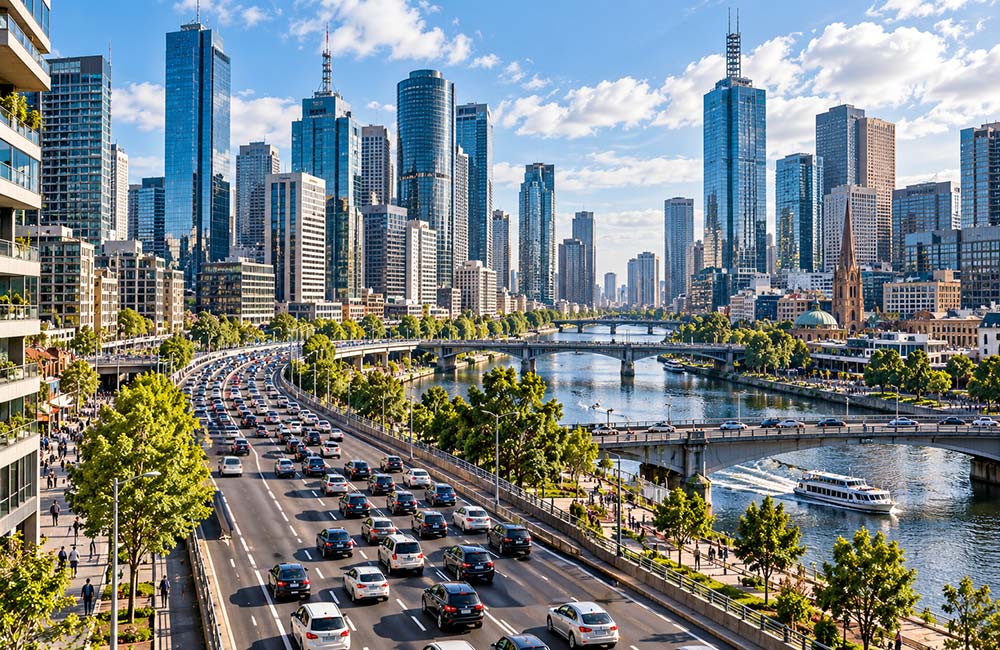
Before disappearance
A world maintained by people
Power, water, transport, communications and buildings depend on vast networks of people, machines and scheduled maintenance.
This timeline is illustrative. Real outcomes would depend on location, climate, engineering, stored energy, automated safety systems and many other factors.
THE FIRST 24 HOURS
What fails first?
Many systems would continue briefly because they are automated, but a civilization designed around constant human supervision would begin developing faults quickly. Transport would stop, unattended fires and equipment failures could occur, and electricity networks would become increasingly unstable as supply and demand moved out of balance.
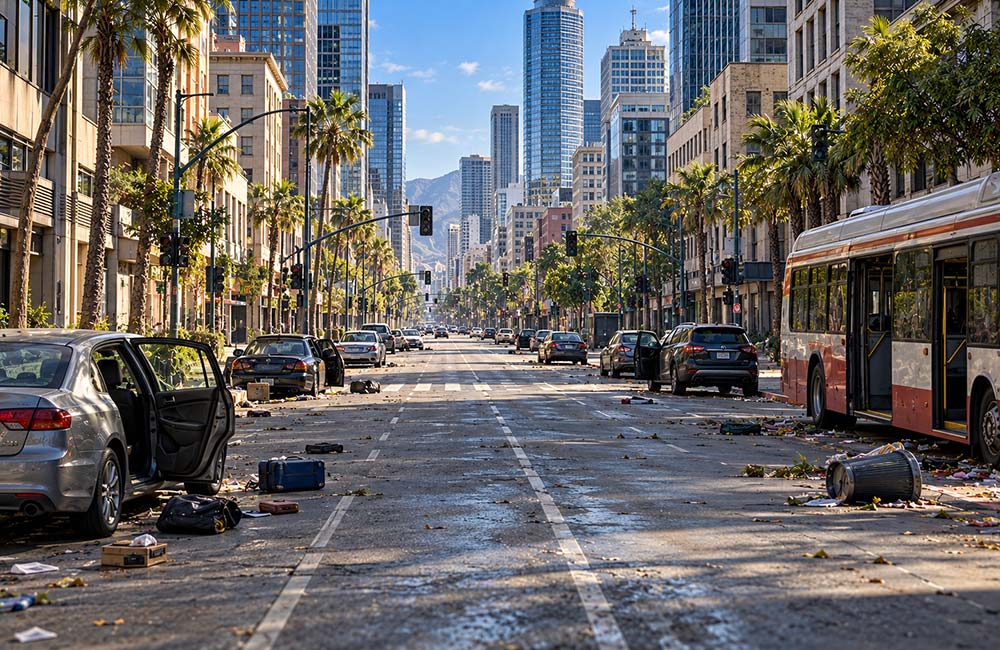
POWER & MACHINES
How long would electricity and machines keep running?
There would not be one worldwide moment when every light went out. Different generating stations, grids, batteries and backup systems would behave differently. What is clear is that complex infrastructure requires monitoring, fuel, repairs and active control. Without people, failures would accumulate and most ordinary services would eventually stop.
Modern plants have engineered shutdown and backup systems. Loss of the external grid is a recognized design condition, but safe shutdown still depends on functioning safety equipment and power supplies. Long-term outcomes would vary by reactor and site, so dramatic claims about every reactor immediately exploding are misleading.
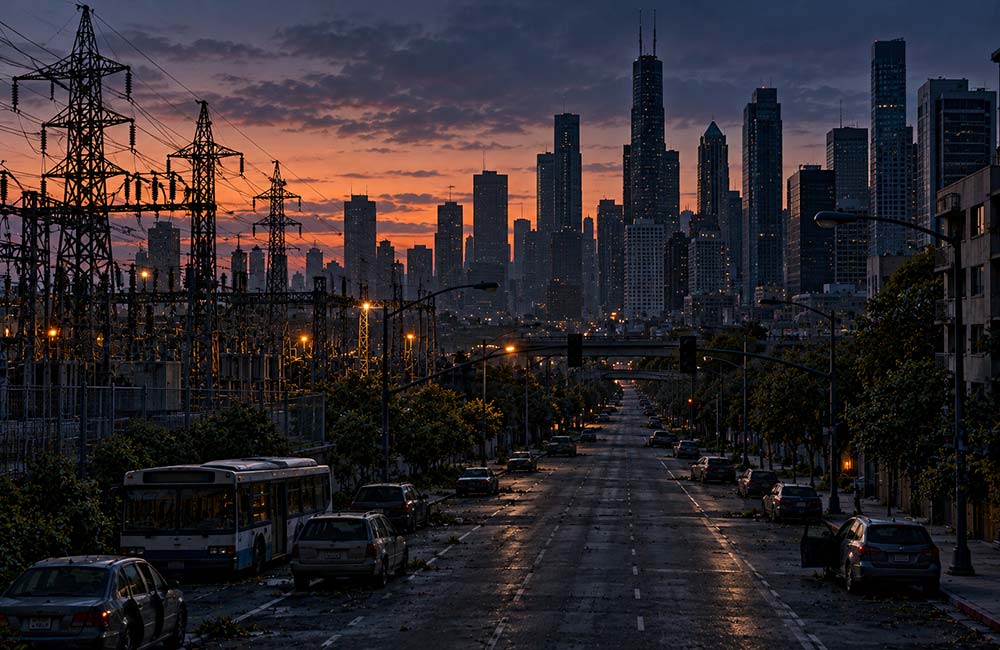
YEARS TO DECADES
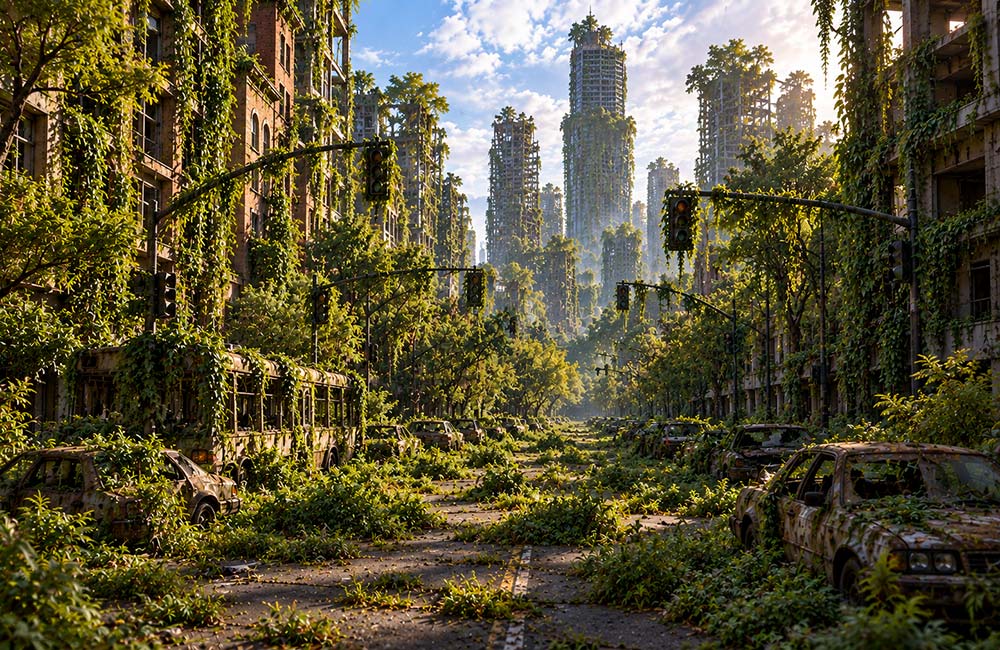
How quickly would cities be reclaimed?
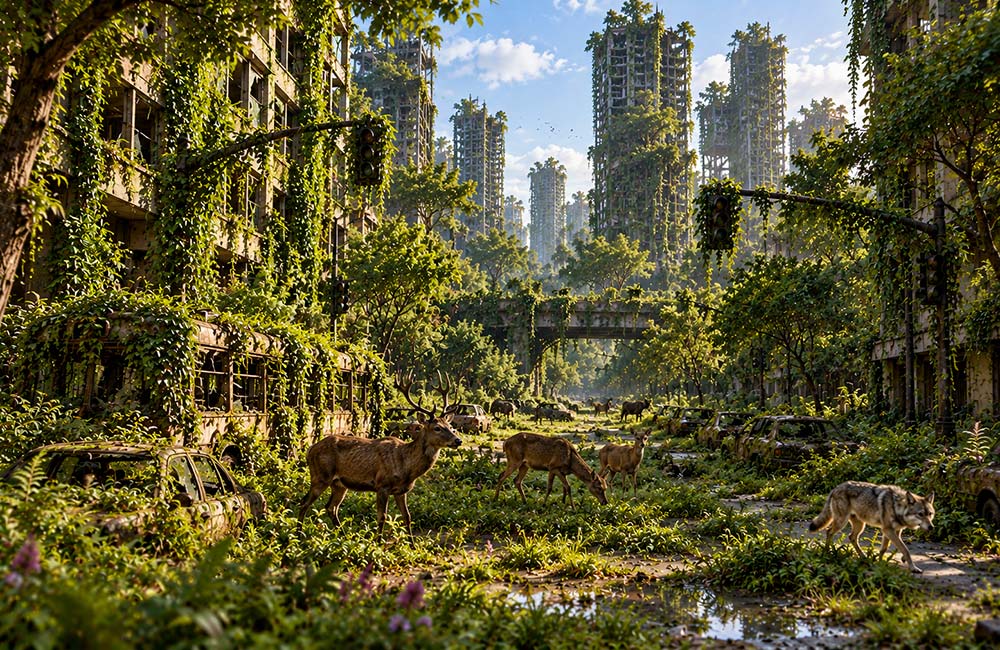
Water is one of the biggest enemies of abandoned structures. Roof leaks, freeze-thaw cycles, corrosion, blocked drainage and plant roots would gradually damage buildings and roads. In wetter climates, vegetation could spread rapidly through unmanaged spaces; in dry climates, recognizable structures could persist much longer.
Cracks widen
Water, roots and temperature changes would progressively break neglected surfaces.
Maintenance stops
Small leaks and corrosion become structural problems when nobody repairs them.
Managed land changes
Lawns, verges and cleared land would transition according to local climate and ecology.
Water wins faster
Pumps, sea defences and drainage systems that require maintenance would eventually deteriorate.
ANIMALS & ECOSYSTEMS
Would wildlife immediately thrive?
Not universally. Species heavily dependent on humans could decline, while some wild species could expand into places previously dominated by people. Fences, invasive species, pollution, dams and other human legacies would remain. Ecosystems would reorganize rather than simply returning to a single untouched state.
ABOVE THE EARTH
What would happen to satellites?
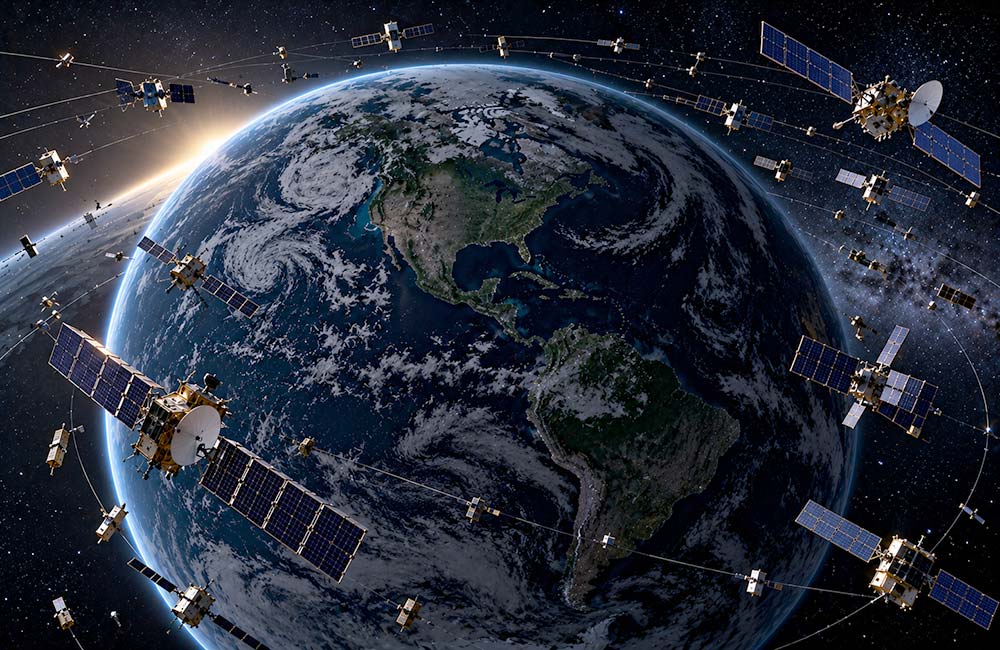
Satellites would not all fall at once. Low-Earth-orbit spacecraft experience atmospheric drag and, without orbit maintenance, many would eventually re-enter. Higher spacecraft can remain in orbit far longer. Some satellites also need regular station-keeping, so even while still functioning they could drift away from their intended operational positions.
CENTURIES LATER
What evidence of us would remain?
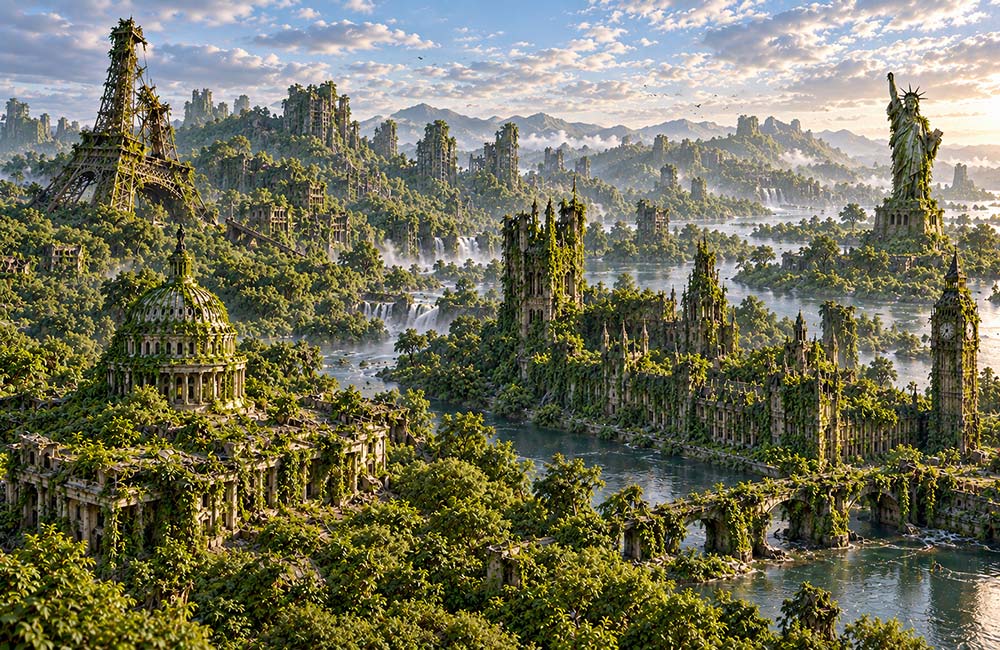
Many ordinary buildings would be ruined, but humanity would not become archaeologically invisible. Large earthworks, tunnels, mines, foundations, ceramics, glass, metals, plastics and altered sediments could persist on very different timescales. Our chemical and geological fingerprints would also outlast individual cities.
WHAT SCIENCE ACTUALLY SAYS
This is a thought experiment, not a forecast
Science can tell us how individual systems behave when maintenance stops: structures weather, vegetation succeeds into unmanaged land, electrical networks need active control, and low-orbit satellites experience atmospheric drag. Combining those processes into an exact global post-human calendar is necessarily speculative.
BOTTOM LINE
Earth would continue without us — but our disappearance would leave a very long echo.
The first changes would be technological: transport, grids and maintained infrastructure would fail. Then weather, water, corrosion and vegetation would steadily reshape the built environment. Over decades and centuries, many cities would become ruins embedded in new ecosystems, while some human-made objects and geological signatures would persist far longer.